Niacinamide + Squalane for Dry Skin: Why They Work Well Together
By Glow Ritual
Table of Contents
- Why Dry Skin Needs Both Niacinamide and Squalane
- Niacinamide vs Squalane: What Each Ingredient Actually Does
- The Tallow Moisturiser Benefits for a Compromised Barrier
- How to Layer Skincare for Maximum Hydration
- A Simple Skincare Routine for Perimenopause
- Common Mistakes That Worsen Dry, Hormonal Skin
- Choosing the Right Niacinamide and Squalane Formula
- The Bottom Line on Niacinamide and Squalane
- Frequently Asked Questions
Last Updated: 27 September 2026
Why Dry Skin Needs Both Niacinamide and Squalane
Dry skin is rarely just a surface problem. When your skin feels tight, flaky and looks dull, it usually signals a compromised barrier that cannot hold onto moisture. Niacinamide and squalane for dry skin work as a team because they address two different layers of the same issue: one rebuilds the barrier while the other locks in hydration.
Most women in their 40s and 50s notice their skin changing as hormone levels shift. Oil production drops, the barrier thins and moisture escapes more easily. A moisturiser that only adds water or oil to the surface misses the root cause. You need ingredients that restore the skin's own ability to function. That is where this pairing becomes so effective.
Here is the core insight: niacinamide and squalane are not interchangeable. They are complementary. One repairs, the other protects. Together, they offer a straightforward path to calmer, plumper and more comfortable skin.
Niacinamide vs Squalane: What Each Ingredient Actually Does
Niacinamide is a form of vitamin B3 that supports the skin barrier by helping it produce ceramides, the lipids that hold skin cells together. It also evens tone, reduces redness and helps skin look smoother. For dry, hormonal skin, its main job is structural: it gives the barrier the building blocks it needs to retain moisture.
Squalane is a silky, plant-derived lipid that mimics the skin's own natural oils. Unlike heavier oils, it absorbs quickly and does not sit on top of the skin. Its role is to fill the gaps between skin cells, creating an instant smoothing effect while preventing water loss.
| Ingredient | Primary Role | Best For | Texture |
|---|---|---|---|
| Niacinamide | barrier support and brightening | Redness, dullness, uneven tone | Light serum |
| Squalane | Moisture locking and softening | Tightness, flaking, roughness | Weightless oil |
| Tallow | Lipid replacement and soothing | Compromised barrier, mature skin | Rich balm |
The distinction matters for how you shop. A niacinamide serum alone may not stop moisture escaping. A squalane oil alone may not supporting the barrier. Choosing niacinamide and squalane together can offer both functions in one routine.
The Tallow Moisturiser Benefits for a Compromised Barrier
Tallow, rendered from grass-fed beef fat, is the closest natural match to the oils human skin produces. Its lipid profile is remarkably similar to our own sebum, which means the skin recognises it and absorbs it readily. For a compromised barrier, this makes tallow an effective base that soothes while it nourishes.
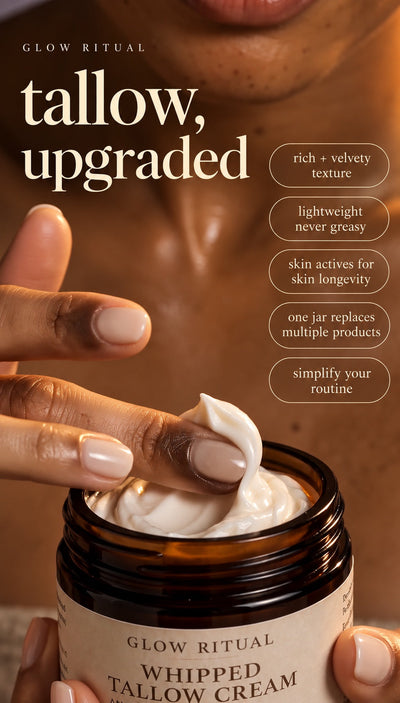
Traditional tallow balms have a reputation for feeling heavy and greasy. That reputation is often deserved. Many are pure tallow with nothing to lighten the texture. Modern formulations change this by combining tallow with skin actives and botanicals to create a whipped, fast-absorbing finish.


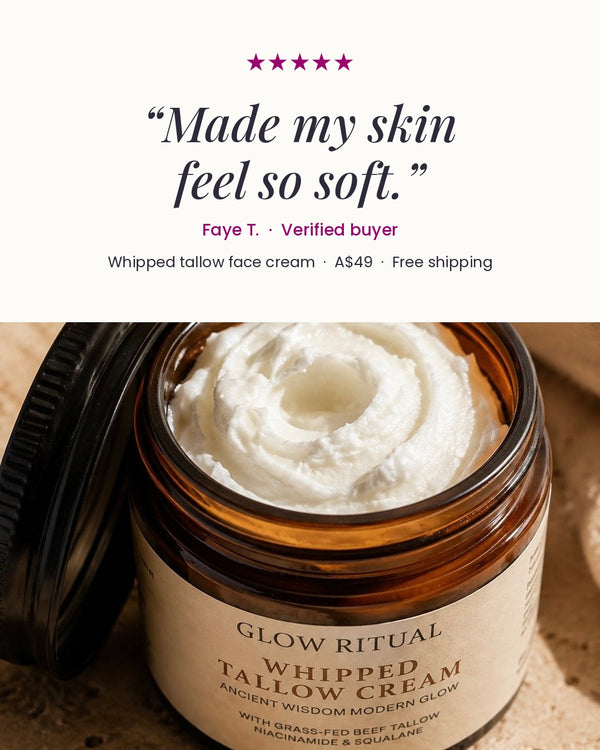
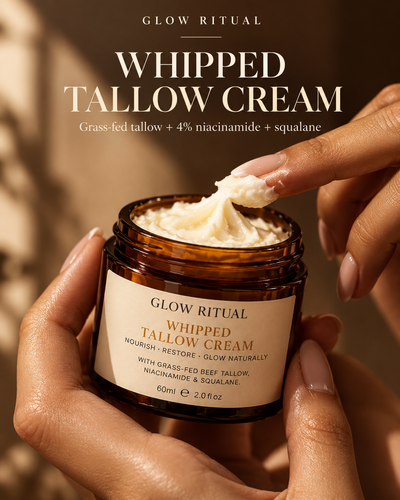
The tallow moisturiser benefits extend beyond simple hydration. Grass-fed tallow provides skin-conditioning fatty acids, which support skin repair. When paired with niacinamide and squalane, it delivers deep nourishment without the heavy residue that puts many people off traditional balms. This is the approach we took with the Glow Ritual Skin Longevity Whipped Tallow Face Cream, which combines grass-fed tallow with 4% niacinamide, squalane, shea butter and vitamin E in a single velvety step.
How to Layer Skincare for Maximum Hydration
Knowing how to layer skincare for maximum hydration comes down to one rule: apply thinnest to thickest. Water-based products go on first, followed by oils and then balms or creams. This order ensures each layer can absorb rather than sit on top of the one before it.
A practical sequence looks like this:
- Cleanse gently with lukewarm water, never hot.
- Apply a hydrating serum or toner while skin is still damp.
- Massage in a few drops of facial oil if you use one.
- Finish with a moisturiser to seal everything in.
The mistake many women make is applying rich creams to dry skin without any water underneath. A moisturiser works by trapping water in the skin, so it needs moisture to hold onto. Applying it to damp skin immediately after cleansing makes a noticeable difference.
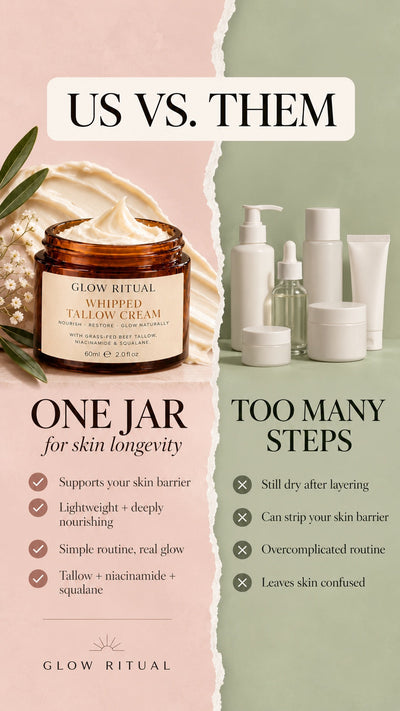
For those who want to simplify, a single well-formulated moisturiser removes the guesswork. A product containing both barrier-supporting and moisture-locking ingredients can replace the serum, oil and cream layers entirely.
A Simple Skincare Routine for Perimenopause
A skincare routine for perimenopause does not need to be complicated. When hormonal changes leave skin dry one week and oily the next, the instinct is to add more products. The opposite approach works better: strip back to the essentials and let a few quality ingredients do the heavy lifting.
Perimenopausal skin can become more reactive, so it helps to introduce new products one at a time. These strip the barrier further, triggering more oil production in some areas and more dryness in others. Switching to gentle, barrier-supporting products helps stabilise the skin.
A minimal routine that works for fluctuating skin includes a gentle cleanser, a single active-rich moisturiser and daily sunscreen. That is enough. The Glow Ritual moisturiser is designed exactly for this stage of life: comfortable enough for oilier days, nourishing enough for dry patches, and made without synthetic fragrance.
Common Mistakes That Worsen Dry, Hormonal Skin
Several well-intentioned habits make dry, hormonal skin worse. The most common is using hot water on the face. Hot water strips natural lipids from the skin surface, leaving it tighter and more dehydrated than before (the American Academy of Dermatology). Lukewarm water cleanses just as effectively without the damage.
Another frequent error is applying active ingredients like niacinamide to completely dry skin without a moisturiser on top. While niacinamide is generally well tolerated, it works best when the barrier is supported simultaneously. Layering it under a lipid-rich moisturiser gives better results than using it alone.
Many women also switch products too quickly. Skin needs four to six weeks to show meaningful change from a new ingredient. Judging a product after three days, when purging or adjustment may still be occurring, leads to unnecessary product churn and a perpetually irritated complexion.
Choosing the Right Niacinamide and Squalane Formula
Not all niacinamide and squalane formulas are created equal. Concentration matters. Niacinamide is most effective at around 4% to 5% (peer-reviewed research). Higher concentrations, such as 10%, increase the risk of irritation without adding noticeable benefits, particularly for mature skin.
The delivery base matters just as much as the actives themselves. Niacinamide and squalane suspended in a silky, lipid-rich base absorb better than the same ingredients in a heavy, occlusive formula. Look for products that combine these actives with nourishing botanicals rather than water-heavy gels that evaporate quickly.
Texture is a practical consideration that many overlook. A formula that feels greasy will end up unused on the bathroom shelf. The best product is one you enjoy applying morning and night, which is why we formulated ours to be silky and fast-absorbing. At $49.00, the Glow Ritual Skin Longevity Whipped Tallow Face Cream replaces several separate products, simplifying both your routine and your budget.
The Bottom Line on Niacinamide and Squalane
Niacinamide and squalane for dry skin is a pairing backed by both science and practical experience. Niacinamide supports barrier function, while squalane adds silky emollience and softness. For women navigating the skin changes of their 40s and 50s, this combination offers visible relief without a complicated routine.
The evidence for these ingredients is well established in cosmetic science. Niacinamide's barrier-supporting role and squalane's similarity to skin's own lipids are documented in dermatological literature, as noted in research on niacinamide's effects on the skin barrier. The practical challenge has always been finding a formula that delivers both without heaviness or irritation.
That is where modern tallow formulations change the picture. By pairing lipid-rich tallow with evidence-backed actives, you get the deep nourishment of a traditional balm with the velvety finish of a contemporary moisturiser. This approach suits the reality of changing skin: sometimes dry, sometimes oily, always in need of balance.
Choosing the right products for dry, changing skin can feel overwhelming, especially when hormonal shifts make your complexion unpredictable. The solution is rarely more products. It is better ingredients, combined intelligently, in a formula you will actually use. Glow Ritual's whipped tallow moisturiser brings together 4% niacinamide, squalane and grass-fed tallow in one simple step, backed by a 30-day money-back guarantee. Get The Glow with Glow Ritual and give your skin the barrier support it needs.
Frequently Asked Questions
Can you use niacinamide and squalane together?
Yes, they are a strong combination for dry skin. Niacinamide works to strengthen the skin barrier and improve its ability to hold onto water, while squalane acts as an occlusive to seal that moisture in. Using them together addresses both the cause and the symptom of dryness. A moisturiser containing both, like Glow Ritual's formula with 4% niacinamide and squalane, simplifies the routine while delivering the benefits of each.
Does niacinamide help with dry skin?
Niacinamide helps dry skin indirectly by supporting the skin barrier. A healthy barrier loses less water, which means skin stays hydrated for longer. It also helps reduce redness and improve texture, which is useful when dryness leaves skin feeling tight and looking dull. For best results, pair it with an emollient ingredient like squalane or tallow that provides the lipids your barrier needs to function properly.
In what order should I apply niacinamide and squalane?
The standard rule is to apply water-based products before oil-based ones. If you use a separate niacinamide serum, apply it to clean, damp skin first and let it absorb. Follow with a squalane-based moisturiser or a product that combines both, like Glow Ritual, to lock in the hydration. This layering order ensures the niacinamide penetrates and the squalane seals it in.
Can these ingredients help with perimenopausal skin dryness?
Yes. Falling oestrogen during perimenopause reduces oil production and slows cell turnover, leaving skin drier and thinner. A skincare routine for perimenopause should focus on barrier support and hydration. Niacinamide helps improve the barrier's function, while squalane replenishes lost lipids to soften and plump the skin. Together, they address the specific changes hormonal skin goes through without heavy, greasy textures.