
Lipid Rich Moisturisers for Mature Skin: 2026 Guide
Table of Contents
- Why Mature Skin Needs Lipid Rich Moisturisers
- Skin Barrier Repair for Mature Skin: What's Actually Happening
- Best Ingredients for Perimenopausal Skin
- How to Treat Dry Skin During Menopause
- What Makes a Lipid Rich Moisturiser Worth Buying
- Glow Ritual Tallow Moisturiser: A Closer Look
- Common Mistakes When Moisturising Mature Skin
- Frequently Asked Questions
Last Updated: 1 September 2026
Why Mature Skin Needs Lipid Rich Moisturisers
Lipid rich moisturisers for mature skin are not a luxury, they are a biological necessity. At Glow Ritual, we work specifically with women navigating skin changes through their 40s, perimenopause and menopause. The answer to why skin feels different and old moisturisers no longer work comes down to lipids.

Healthy skin maintains a barrier made up of ceramides, fatty acids and cholesterol, the structural fats that hold moisture in and irritants out. As oestrogen declines through perimenopause and menopause, the skin produces fewer of these lipids naturally. The result is not just dryness, but a fundamentally compromised barrier that struggles to retain water, regulate inflammation and repair itself overnight.
Standard moisturisers built around water, humectants and light emollients cannot fully address this deficit. They hydrate the surface but do not replenish the lipid matrix that mature skin is actively losing. Lipid rich moisturisers supply the fats the skin is no longer making in sufficient quantities.
Skin Barrier Repair for Mature Skin: What's Actually Happening
The outermost layer of skin, the stratum corneum, functions like a brick wall: skin cells are the bricks, and a lipid mortar of ceramides, free fatty acids and cholesterol holds everything together. When that mortar depletes, the wall develops gaps. Water escapes through those gaps constantly (transepidermal water loss, or TEWL), while environmental irritants, bacteria and allergens get in.
Signs Your Barrier Is Compromised
Common signs include persistent tightness even after moisturising, stinging or reactions to previously tolerated products, flaking or rough texture that hydration alone cannot fix, redness or uneven tone, and a dull appearance. Barrier damage is cumulative, years of over-cleansing, harsh actives and under-moisturising compound the depletion that hormonal change accelerates.
How Lipids Rebuild What Hormones Take Away
Topical lipids work by filling the gaps that depleted ceramides and fatty acids leave behind. The right lipid profile is absorbed into the stratum corneum and becomes part of the barrier itself. According to research published in the International Journal of Molecular Sciences on skin barrier function and lipid composition, the ratio of ceramides, fatty acids and cholesterol in the stratum corneum is critical to barrier integrity. Topical application of these lipids in a physiologically relevant ratio supports barrier restoration more effectively than any single lipid alone.
Best Ingredients for Perimenopausal Skin
The best ingredients for perimenopausal skin address two problems simultaneously: the lipid deficit and the functional changes that come with lower oestrogen. Skin becomes thinner, slower to turn over, more reactive and more prone to uneven tone.
Tallow: The Lipid Profile That Mirrors Your Skin
Tallow is rendered animal fat from grass-fed cattle, and its biochemistry is unusually well-matched to human skin. Grass-fed tallow contains oleic acid, palmitic acid, stearic acid and conjugated linoleic acid, the same fatty acids found in the skin's natural sebum. Because of this similarity, tallow absorbs readily without sitting on the surface or clogging pores.
A well-formulated tallow moisturiser, particularly one whipped or blended with lighter ingredients, absorbs quickly and leaves skin feeling nourished rather than coated. For mature skin specifically, the oleic acid content in tallow is particularly relevant as an emollient well-suited to the drier, thinner skin that perimenopause produces.
Niacinamide, Squalane and Supporting Botanicals
Niacinamide (vitamin B3) is one of the most well-researched cosmetic actives available. As documented in a review of niacinamide's dermatological applications in the Journal of Cosmetic Dermatology, it supports the skin barrier, reduces the appearance of uneven tone and redness, and helps regulate surface sebum.
Squalane is a lightweight, plant-derived lipid that mimics the skin's own squalene, a sebum component that declines significantly with age. It absorbs without residue and reinforces the barrier without heaviness.
Supporting botanicals like shea butter, olive oil and vitamin E round out a lipid-rich formula. Shea butter contributes additional fatty acids and has well-documented soothing properties. Vitamin E is a fat-soluble antioxidant that protects the lipid barrier from oxidative damage.
How to Treat Dry Skin During Menopause
Treating dry skin during menopause requires a different approach than treating ordinary seasonal dryness. The dryness is structural, not temporary. Drinking more water and using a light lotion will not resolve it.
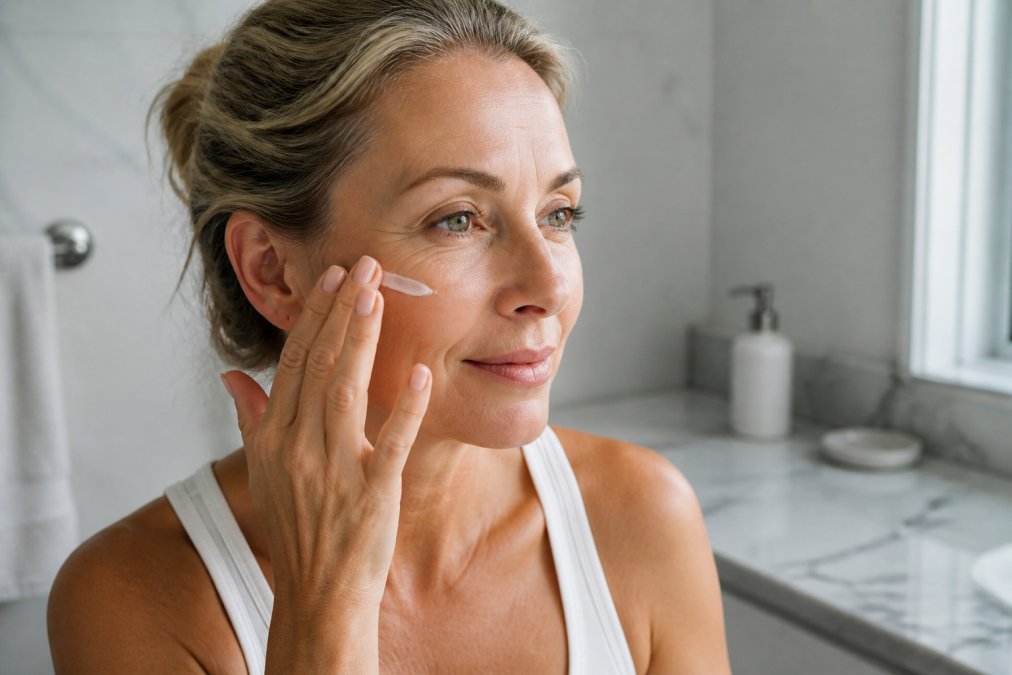
Apply moisturiser to damp skin. Immediately after cleansing, while skin is still slightly damp, apply your moisturiser to trap water before it evaporates.
Switch to a non-stripping cleanser. A cream or oil cleanser that does not foam aggressively is far less damaging to already-compromised mature skin than many "gentle" foaming cleansers.
Moisturise morning and night without skipping. Menopausal skin loses water faster overnight than younger skin does.
Reduce the number of actives you're layering. Stacking retinols, acids and vitamin C serums on a compromised barrier stresses it further. A single well-formulated moisturiser with built-in actives is often more effective than a multi-step routine.
Be patient with the timeline. Barrier repair takes time. Many women report meaningful improvement within two to four weeks of consistent use, but full benefits often take six to eight weeks.
|
Approach |
What It Does |
Best For |
|---|---|---|
|
Lipid-rich moisturiser |
Replenishes barrier fats, seals moisture |
Structural dryness, barrier repair |
|
Humectant serum (e.g. hyaluronic acid) |
Draws water into the skin |
Dehydration, surface plumpness |
|
Occlusive balm |
Prevents water loss overnight |
Very dry, cracked or reactive skin |
|
Simplified routine |
Reduces barrier stress from layering |
Reactive, sensitive or compromised skin |
According to guidance from the Australasian College of Dermatologists on managing dry skin, consistent use of emollient-rich moisturisers is one of the most evidence-supported strategies for managing chronic skin dryness, particularly in hormonally-driven presentations.
What Makes a Lipid Rich Moisturiser Worth Buying
Not all lipid rich moisturisers are created equal. Here is what to actually evaluate.
Texture: Lightweight Versus Heavy Balm
A very heavy balm will seal the barrier effectively but may feel uncomfortable during the day, interfere with makeup, and in some cases trap heat or bacteria if the skin is reactive. A lightweight, fast-absorbing lipid-rich formula achieves the same barrier-replenishing effect without the residue. The key is formulation: whipped or emulsified tallow blended with lighter lipids like squalane absorbs in a way that a straight balm does not. Absorption speed is about formulation, not lipid content, a well-made lightweight formula can deliver more lipids to the barrier than a poorly formulated heavy one.
One Product Versus a Multi-Step Routine
Every additional step adds potential irritants and creates more opportunities for barrier disruption. A single, well-formulated lipid-rich moisturiser that contains both barrier-supporting fats and evidence-backed actives like niacinamide can outperform a five-step routine for women whose skin is already stressed.
Glow Ritual Tallow Moisturiser: A Closer Look
The Glow Ritual Australian Tallow Moisturiser + Skin Actives was formulated specifically for this gap in the market: a lipid-rich moisturiser that does not compromise on texture or practicality.
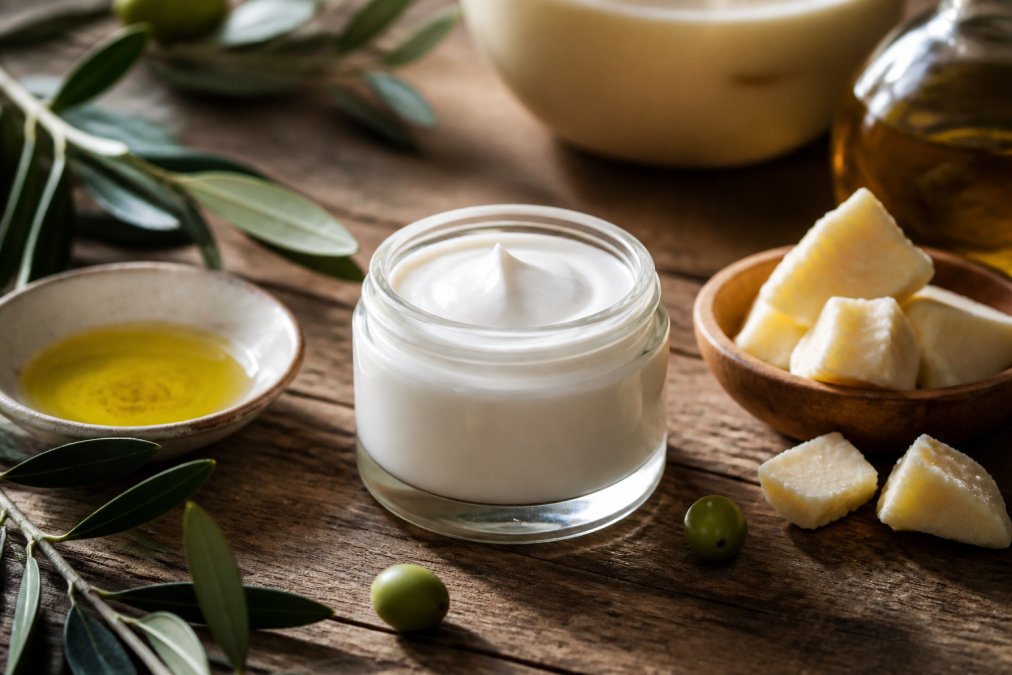
The formula centres on grass-fed tallow combined with 4% niacinamide, squalane, shea butter, olive oil, vitamin E and vanilla extract. The whipped texture absorbs quickly, addressing the most common objection to tallow skincare. Customers consistently describe it as fast-absorbing and non-greasy.
At $49.00 per jar, it is designed to replace multiple products rather than sit alongside them.
Common Mistakes When Moisturising Mature Skin
The biggest mistake is treating menopausal dryness like ordinary dryness and reaching for the same light lotion that worked at 35. The skin has changed structurally, and the moisturiser needs to change with it.
Over-exfoliating. Mature skin has slower cell turnover, and exfoliating frequently to address dullness often backfires. Exfoliation removes the surface barrier layer. Once or twice a week at most with a gentle chemical exfoliant is appropriate.
Applying moisturiser to completely dry skin. Lipid-rich ingredients seal whatever moisture is present. Damp skin gives the formula something to work with.
Ignoring the neck and décolletage. These areas have thinner skin and fewer sebaceous glands, making them more vulnerable to hormonal lipid depletion.
Switching products too frequently. Barrier repair takes weeks, not days. Give a lipid-rich formula at least four weeks of consistent use before evaluating whether it is working.
Using too much product. A pea-sized amount is typically sufficient for the full face and neck. More does not accelerate results.
As noted in the British Journal of Dermatology's overview of emollient therapy and skin barrier function, consistent, appropriate application of emollient-rich products is more effective than intermittent heavy application.
Dry, reactive, hormonally-changing skin does not respond well to complicated routines or surface-level hydration. The real solution is restoring the lipid matrix that oestrogen decline depletes, and doing it consistently, with a formula built for the job. Glow Ritual's Tallow Moisturiser + Skin Actives combines grass-fed tallow, 4% niacinamide and squalane in a lightweight, fast-absorbing formula designed specifically for mature and perimenopausal skin. Get started with Glow Ritual and give your skin the barrier support it has been missing.
Frequently Asked Questions
Why does mature skin need lipid rich moisturisers specifically?
From the mid-40s onward, oestrogen levels drop and the skin produces fewer of its own lipids, including ceramides and fatty acids. This weakens the skin barrier, making it harder to retain moisture. Lipid rich moisturisers physically replenish those missing fats, helping the barrier function properly again. Standard water-based moisturisers hydrate temporarily but don't address the structural deficit that makes mature skin feel tight, dull and prone to sensitivity.
Is tallow good for dry, mature skin?
Tallow from grass-fed beef has a fatty acid composition that closely resembles the skin's own sebum, including oleic, palmitic and stearic acids. This makes it well-suited to mature skin that has lost lipid density. Unlike some heavy balms, a well-formulated tallow moisturiser can absorb without leaving a greasy residue. Paired with actives like niacinamide and squalane, it supports barrier repair and hydration simultaneously, which is why it suits perimenopausal and menopausal skin particularly well.
What is the difference between a humectant and a lipid rich moisturiser?
Humectants such as hyaluronic acid draw water into the skin from the environment or deeper skin layers. They hydrate but don't seal that moisture in. Lipid rich moisturisers work differently: they fill the gaps in the skin barrier so water can't escape. Mature skin benefits most from both working together, but if the barrier is compromised, lipids come first. Without them, humectants can actually pull moisture from the skin rather than the air, worsening dryness.
How often should you apply moisturiser to mature or menopausal skin?
Twice daily is the general recommendation: once in the morning after cleansing and once at night before bed. Mature and menopausal skin loses moisture faster overnight due to reduced barrier function, so an evening application of a lipid rich moisturiser is especially useful. If skin feels tight or dry midday, a small additional application is fine. A well-formulated product should absorb fully without needing to reapply frequently.
This article was written using GrandRanker