Do You Need a Separate Day and Night Moisturiser?
By Glow Ritual
Share
For most people, no: you do not automatically need one moisturiser for daytime and another for night. If a well-formulated moisturiser keeps your skin comfortable and works beneath sunscreen in the morning, it can often do the same moisturising job again at night.
The bigger difference between morning and evening skincare is not the word day or night on the jar. It is what your skin needs around that moisturiser. In the morning, sun protection matters. At night, cleansing off sunscreen, makeup and the day’s grime matters.
That makes this a useful question for anyone whose bathroom shelf has quietly turned into a small laboratory: are two creams actually helping your skin, or simply doubling the routine?
What a moisturiser is actually there to do
A moisturiser’s core job is to help keep water in the outer layers of skin and improve how dry skin feels and looks. Different formulas do this through combinations of humectants, emollients and occlusive ingredients.
A review of skin-barrier science describes these roles neatly: humectants attract water, emollients soften and integrate with the outer skin, and occlusives help slow water loss. Dermatologists also recommend moisturiser as a basic part of caring for dry and ageing skin.
None of those functions suddenly expires at sunset.
So why do day creams and night creams exist?
There can be practical differences. A daytime moisturiser may be lighter so it layers neatly under makeup or sunscreen. Some day products contain SPF, although a dedicated broad-spectrum sunscreen can make it easier to apply the amount needed for reliable protection.
Night creams are often richer. Some also contain active ingredients that are intended for evening use or can make skin more sun-sensitive.
That can be useful, but it does not mean everyone needs two moisturisers. Product categories are partly about formulation and partly about how skincare is marketed. Your skin is allowed to be less impressed by labels than the beauty aisle is.
When one moisturiser can be enough
A single moisturiser is a perfectly reasonable approach if it:
- leaves your skin comfortable rather than tight or greasy;
- layers well under your daytime sunscreen;
- does not sting, burn or repeatedly trigger irritation;
- provides enough richness for your skin at night; and
- fits a routine you can use consistently.
This is especially appealing if your goal is a simpler routine. Dermatology guidance supports limiting unnecessary products when irritation is a concern, and the American Academy of Dermatology notes that using several anti-ageing products at once can irritate skin and make signs of ageing more noticeable.
If you are trying to pare things back, our simple skincare routine for your 40s is a useful place to start.
When two moisturisers might make sense
There are times when your morning and evening needs genuinely diverge.
Your night-time skin feels much drier. You may prefer a richer texture before bed and something lighter beneath sunscreen during a humid Australian morning.
Your daytime product contains sunscreen. There is no benefit in wearing SPF to bed, so a separate plain moisturiser at night makes sense.
You use a prescribed or potent active. Some treatment routines have specific instructions about timing, layering and moisturising. Follow the directions from your prescriber or the product label rather than squeezing them into a generic skincare rule.
Your environment changes. Air conditioning, heating, travel, humidity and seasonal weather can all change how dry skin feels. Your routine can flex without becoming complicated.
What about skin that is getting drier with age?
This is where people are often sold more steps when they may simply need a better moisturising strategy.
Skin tends to become drier with age, and changes in the skin barrier can affect how well it retains water. Around perimenopause and menopause, some women also notice new dryness, tightness or changes in texture.
A richer or more lipid-focused moisturiser may feel more comfortable, but the answer is not automatically a separate AM cream, PM cream, sleeping mask and three serums.
If this sounds familiar, read why skin loses lipids with age and our guide to a simpler approach to dry skin in perimenopause.
Ingredients matter more than the clock
Rather than shopping by time of day, look at what is in the formula and whether it suits your skin.
Niacinamide has evidence supporting epidermal barrier function. Research has shown that topical niacinamide can influence production of skin lipids including ceramides and fatty acids, and more recent reviews continue to support its role as a well-studied cosmetic ingredient.
Squalane is an emollient that helps soften and smooth the skin surface. It is useful in formulas designed to make dry skin feel more comfortable.
Lipid-rich ingredients can contribute richness and emollience, which is one reason tallow has reappeared in modern skincare conversations. Tallow itself is not a medical treatment, and the quality of the whole formula matters more than any single hero ingredient.
For a closer look at two of those ingredients, see why niacinamide and squalane work well together for dry skin.
A simple morning and night routine
If your skin prefers simplicity, this is enough structure for many days:
Morning: gentle cleanse or rinse if needed → moisturiser → broad-spectrum sunscreen.
Evening: cleanse thoroughly → moisturiser.
That is the backbone. Treatments can be added when there is a clear reason for them, rather than because a routine feels incomplete without a row of bottles.
One extra trick is worth keeping: applying moisturiser to slightly damp skin after cleansing can help trap water at the surface. We explain the technique in our guide to applying moisturiser on damp skin.
Where Glow Ritual fits
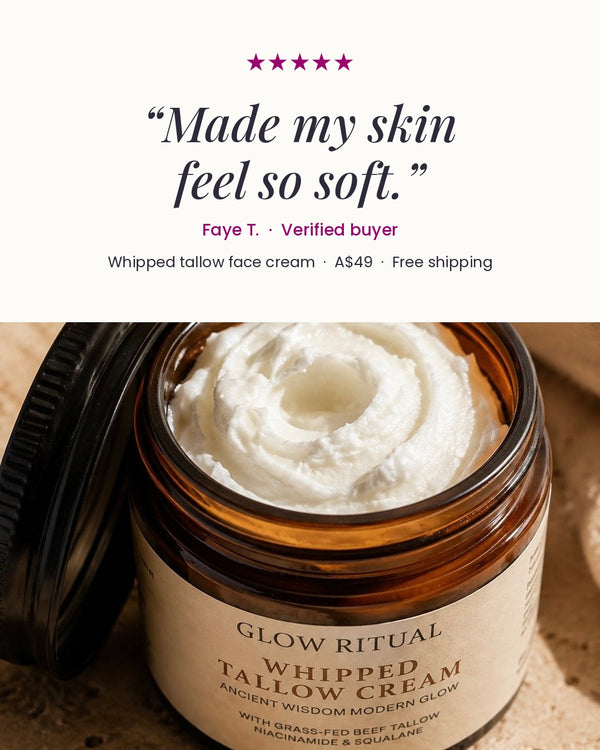
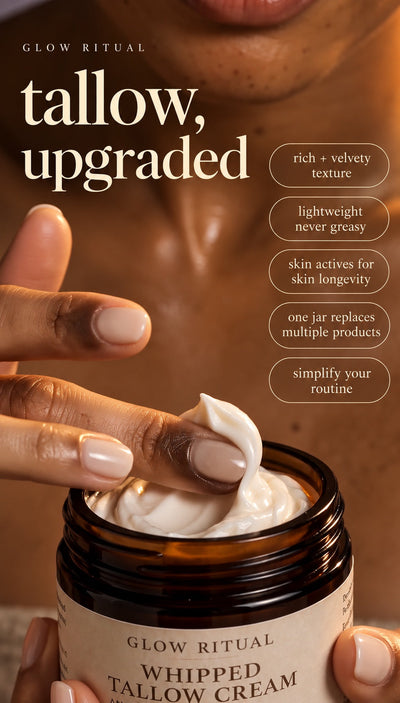
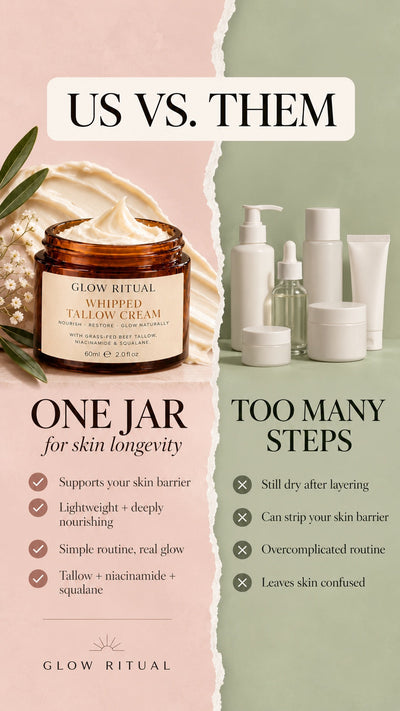
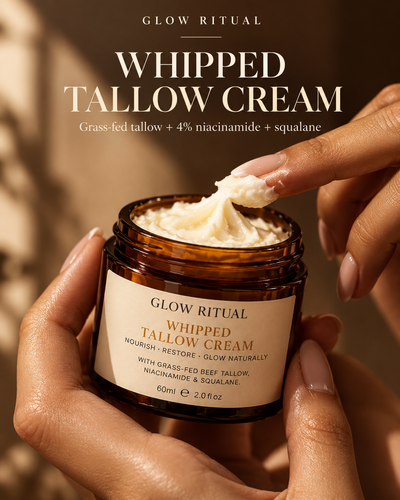
Glow Ritual’s Advanced Tallow Skincare was built around the idea that one hardworking moisturiser can earn its place morning and night. The formula combines grass-fed tallow with 4% niacinamide and squalane, creating a rich, deeply hydrating texture with a velvety, non-greasy finish.
Use it as your moisturising step, then add sunscreen over the top in the daytime. At night, it can be the final step after cleansing.
Meet the Glow Ritual Tallow Face Moisturiser →
The takeaway
Your skin does not need a wardrobe change simply because the sun went down. If one moisturiser suits your skin in both routines, there is no cosmetic rule requiring a second jar.
Use two when there is a genuine reason: different texture needs, SPF, a treatment plan or a major change in climate. Otherwise, consistency, gentle cleansing, adequate moisturising and daytime sun protection are a very solid foundation for skin longevity.
A note on skin health: Persistent dryness, itching, cracking, burning, rash or sudden changes can have causes that skincare alone will not solve. If symptoms are ongoing or concerning, speak with a GP or dermatologist.