Why Use Squalane in Skincare? Benefits for Dry, Mature Skin
By Glow Ritual
Table of Contents
- What Squalane Does for Skin (and Why It's Not Just Hype)
- Why Squalane Suits Mature, Perimenopausal and Menopausal Skin
- Squalane vs Hyaluronic Acid: Which One Does What
- The Benefits of Niacinamide for Skin Alongside Squalane
- How to Layer Skincare Products Without Wrecking Your Barrier
- Common Mistakes People Make With Squalane
- Conclusion
- Frequently Asked Questions
Last Updated: 27 September 2026
What Squalane Does for Skin (and Why It's Not Just Hype)
Squalane is a silky, skin-conditioning lipid that mimics one of the oils your skin already produces, which is why squalane in skincare hydrates without the heaviness of richer emollients. If you have ever wondered why use squalane in skincare when your bathroom shelf is already crowded, the short answer is that it does a job most oils cannot: it softens and seals in moisture while staying almost weightless. At Glow Ritual, we include squalane in our tallow moisturiser.
Squalane is a saturated, stable form of squalene, a lipid naturally present in human sebum, and it is used in skincare to moisturise, soften and support the skin barrier without a greasy finish.
That single sentence explains why the ingredient has moved from niche to staple. It is not a trend ingredient propped up by marketing. It is a structural component your skin recognises.
Squalene vs Squalane: A One-Letter Difference That Matters
The two words look almost identical, and that is where the confusion starts. Squalene is the unstable, unsaturated version your body produces naturally. Squalane is the hydrogenated, shelf-stable version used in cosmetics. That extra hydrogen atom is the difference between an oil that oxidises and one that keeps.
Squalene oxidises quickly and turns rancid, which is why it never worked well in a jar. Squalane stays stable, absorbs fast and does not clog pores the way heavier oils can. For anyone with a compromised barrier, that stability matters more than the source.
Why Plant-Derived Squalane Is the Standard Now
Most squalane on the market today is plant-derived, typically from olives, sugarcane or other renewable sources, rather than shark liver. The shift happened because plant-derived squalane is stable, sustainable and identical in function to the animal-derived version. According to Cosmetic Ingredient Review assessments of squalane safety, the ingredient is well tolerated in topical formulations. For a barrier that is already reactive, that tolerance is the whole point.
Why Squalane Suits Mature, Perimenopausal and Menopausal Skin
Declining oestrogen reduces the skin's natural lipid production, so mature skin loses moisture faster and feels tighter and drier than it did a decade ago (PubMed). Squalane helps because it replenishes a lipid the skin is no longer making in the same quantity. It is not a hormone fix. It is a moisture fix.

Women in their 40s and 50s often describe skin that is dry in some places and oily in others, sometimes in the same week. Squalane is silky and often suits people who dislike heavier oils, although individual skin responses vary. A common mistake is reaching for the richest cream available during a dry spell, which can leave skin feeling smothered. Squalane gives you nourishment without the weight.
Squalane vs Hyaluronic Acid: Which One Does What
Squalane and hyaluronic acid are not competitors. They do different jobs, and the best routines use both. Hyaluronic acid is a humectant: it draws water into the skin. Squalane is an emollient and occlusive: it softens and seals that water in. One hydrates, the other holds.
| Ingredient | Primary Role | Best For | Texture |
|---|---|---|---|
| Squalane | Seals in moisture, softens | Dry, mature, reactive skin | Silky oil |
| Hyaluronic Acid | Draws in water | Dehydrated skin, all types | Watery serum |
| Niacinamide | Supports barrier, evens tone | Uneven, reactive skin | Water-based |
The practical takeaway: apply hyaluronic acid first on damp skin, then layer squalane on top to trap the moisture. If you only use one, match it to your main concern. Dehydration calls for hyaluronic acid. Dryness and a weakened barrier call for squalane.
The Benefits of Niacinamide for Skin Alongside Squalane
Niacinamide and squalane work as a pair because one supports the barrier from the inside while the other protects it from the outside. The benefits of niacinamide for skin include strengthening the barrier, calming redness and helping to even tone over time. Squalane then seals that work in.
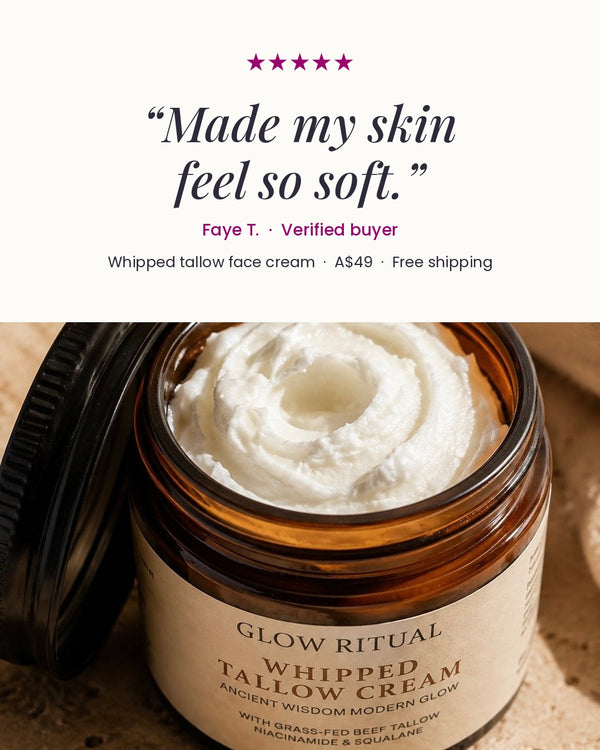
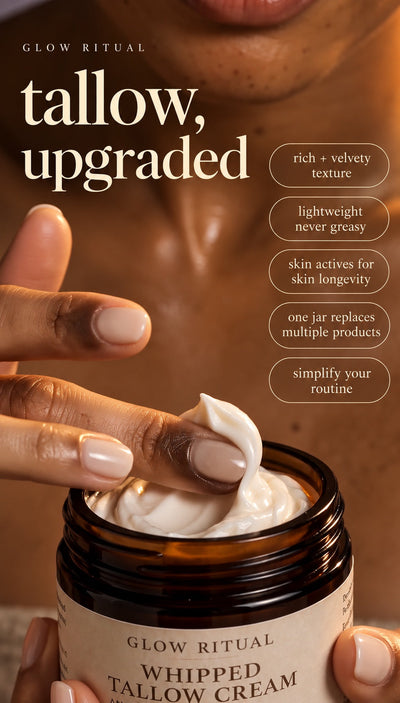
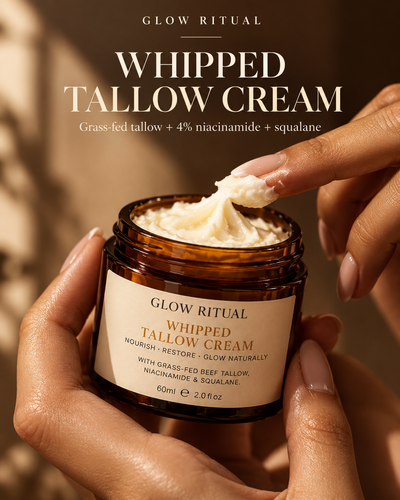
Glow Ritual's tallow moisturiser combines 4% niacinamide with squalane and grass-fed tallow, so the barrier support and the moisture seal happen in one step. That combination is deliberate. Niacinamide is water-soluble and squalane is oil-soluble, which means together they cover both sides of barrier care. If you have been layering three serums to get the same result, this is the shortcut.
How to Layer Skincare Products Without Wrecking Your Barrier
Layering skincare is about order, not quantity. The rule is thinnest to thickest: cleanser, water-based serums, then oils and creams. Get the sequence wrong and your most expensive product sits on top of skin it cannot penetrate.
Here is a simple sequence that protects the barrier:
- Cleanse gently, then leave skin slightly damp
- Apply water-based actives such as niacinamide
- Follow with hyaluronic acid if you use it
- Seal with a squalane or lipid-rich moisturiser
- Use sunscreen in the morning as the final step
A common mistake is layering too many actives at once. Retinol, acids and vitamin C together will irritate even resilient skin. Keep the routine short and consistent. For most mature skin, four steps done daily beat eight steps done sporadically. The Australian Skin and Skin Cancer Research Centre guidance on skin barrier function supports keeping routines simple when the barrier is compromised.
Common Mistakes People Make With Squalane
The biggest mistake is expecting squalane to act like a humectant. It seals moisture in, but it does not add water on its own. Apply it to dry skin and you seal in dryness. Apply it over damp skin or a hydrating serum and it performs the way it should.
Other pitfalls worth avoiding:
- Using squalane as a replacement for sunscreen rather than an addition to it
- Layering it over heavy occlusives, which stops it absorbing
- Assuming plant-derived squalane is weaker than animal-derived, when they function identically
- Skipping patch testing on a reactive barrier
Conclusion
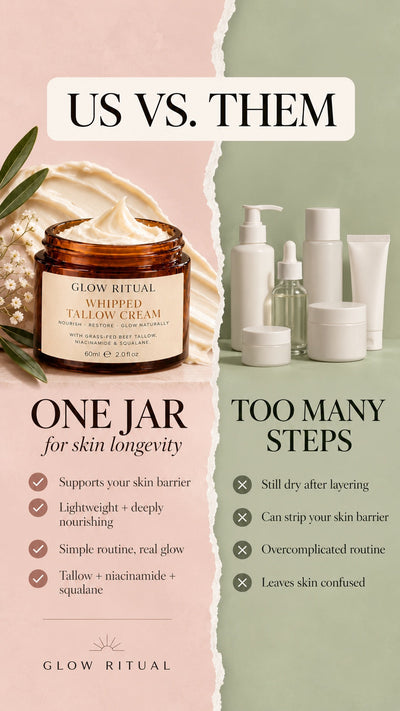
The challenge with mature skin is rarely a lack of products. It is too many products doing overlapping jobs, which leaves the barrier confused and under-supported. Squalane solves a specific problem: it restores a lipid your skin is no longer producing enough of, without the weight that makes richer creams uncomfortable.
Glow Ritual's tallow moisturiser brings squalane together with 4% niacinamide, grass-fed tallow and nourishing botanicals in one velvety, fast-absorbing step. It supports the barrier, hydrates deeply and simplifies a routine that has grown too complicated, all backed by a 30-Day Money-Back Guarantee. Get The Glow and give your skin one hardworking product instead of eight.
Frequently Asked Questions
Is squalane suitable for all skin types?
Squalane suits most skin types, including oily and combination skin, because it mimics lipids your skin already produces and absorbs without a heavy film. It is especially useful for dry, mature and barrier-compromised skin, where lipid levels drop with age and hormonal shifts. If you are prone to congestion, look for a silky squalane skincare formula rather than a thick balm, and patch test first if your barrier is currently reactive.
What is the difference between squalene and squalane?
Squalene is the unsaturated lipid your skin produces naturally, but it oxidises quickly and goes rancid in a jar. Squalane is the stable, hydrogenated version used in cosmetics: same skin-friendly structure, far longer shelf life. That single chemical change is why you see squalane on ingredient lists rather than squalene, and why it holds up in a moisturiser you use over several months.
Can squalane help with perimenopausal dryness?
It can help, though it works best as part of a barrier-supporting routine rather than on its own. During perimenopause, declining oestrogen reduces the skin's natural lipids, which shows up as tightness, flaking and dullness. Squalane tops up those lipids and reduces water loss, so skin feels less tight. Pair it with niacinamide and occlusive ingredients like tallow or shea butter for a more complete approach to hormonal dryness.
How does squalane fit into a routine with niacinamide?
Apply niacinamide first, then squalane or a squalane-based moisturiser on top. Niacinamide is water-soluble and needs to reach the skin directly, while squalane is oil-based and works as a sealing layer that slows water loss. If you use a single product containing both, such as a tallow moisturiser with 4% niacinamide and squalane, you skip the layering question entirely. Either way, apply to slightly damp skin for better absorption.