Tallow + Squalane Skincare in Australia: What to Look For
By Glow Ritual
Table of Contents
- Why Tallow and Squalane Skincare Is Growing in Australia
- The Real Benefits of Tallow for Skin
- Tallow vs Squalane for Ageing Skin: Do You Need Both?
- Natural Skincare for Perimenopause: What Your Skin Actually Needs
- Glow Ritual: Australian-Owned Tallow + Squalane Skincare
- What to Look For When Comparing Tallow Skincare Brands
- Common Myths About Tallow-Based Skincare (And What the Evidence Shows)
- Frequently Asked Questions
Last Updated: 27 September 2026
Why Tallow and Squalane Skincare Is Growing in Australia
Tallow and squalane skincare has moved from niche curiosity to a genuine category. People are increasingly frustrated with moisturisers that promise transformation but deliver only temporary surface hydration. At Glow Ritual, we've watched this frustration translate into a specific question: is there a moisturiser combining deep nourishment with evidence-backed actives?

Tallow and squalane skincare sits at the intersection of two movements: a return to ancestral, lipid-rich ingredients that mimic human skin structure, and demand for formulations that include actives with credible research. Niacinamide, squalane, and vitamin E aren't trendy additions, they have documented roles in skin barrier function, tone, and hydration.
Below, we examine what makes this combination effective, what to look for when comparing options, and why formulation details matter more than marketing.
The Real Benefits of Tallow for Skin
Tallow's benefits are grounded in its close resemblance to human sebum. Rendered animal fat, typically from beef, tallow's fatty acid profile, oleic, palmitic, and stearic acids, mirrors lipids your skin naturally produces. This structural similarity means tallow absorbs readily rather than sitting on the surface like many plant oils.

Skin depleted of natural lipids through hormonal changes, over-cleansing, or environmental stress responds well to ingredients that replace what's been lost. Tallow provides oleic acid for softening, palmitic acid for barrier integrity, and stearic acid for smoothness. Its cosmetic role is better understood through its emollient fatty acids than through assumptions about a consistent vitamin dose.
A well-formulated tallow moisturiser feels richer than water-heavy creams without feeling heavy or occlusive. The key lies in processing and what it's combined with.
How Tallow Differs from Standard Plant-Based Moisturisers
Most mainstream moisturisers use water, emulsifiers, and plant-derived oils or humectants. They work by drawing moisture to skin or creating temporary barriers. Tallow works differently: it delivers lipids structurally compatible with skin's own, allowing integration into the barrier rather than simple coating.
Plant oils have merit, but many are high in linoleic acid, a different composition than human sebum. Tallow's ratio of oleic to palmitic to stearic acid is closer to what skin understands. For compromised barriers, that compatibility produces noticeable results.
Why Grass-Fed Tallow Quality Matters
Not all tallow is equivalent. Grass-fed sourcing can influence fatty-acid composition, but the finished formulation, storage and processing also matter.
Base ingredient quality affects what's delivered to skin. Lower-quality or heavily processed tallow may lack the nutrient content that makes it genuinely useful. Sourcing transparency matters.
According to Healthline's overview of tallow and skin lipids, fatty acid composition varies significantly based on diet, making sourcing transparency relevant for anyone choosing tallow-based skincare.
Tallow vs Squalane for Ageing Skin: Do You Need Both?
Tallow and squalane are often discussed as alternatives when they're actually complementary.
Squalane is a stable, hydrogenated form of squalene, a compound naturally occurring in human sebum. It is velvety and commonly used when formulators want emollience without a very heavy finish. It's an excellent emollient that locks in moisture by reinforcing the lipid barrier, particularly valuable for mature skin where deep nourishment without heavy texture is the goal.
Tallow provides a broader spectrum of lipids and fat-soluble vitamins squalane alone doesn't offer. It's richer, more complex, and more structurally similar to sebum.
Used together, they address different aspects of the same problem. Tallow delivers lipid density and nutrients depleted, mature skin needs. Squalane adds lightness, fast absorption, and barrier reinforcement. The combination produces a moisturiser more elegant than traditional tallow balm while delivering more than squalane alone.
For ageing skin where sebum production has declined and barrier efficiency is reduced, having both is a genuine advantage.
Ingredient |
Key Role |
Texture |
Best For |
|---|---|---|---|
Grass-fed tallow |
Rich emollience and reduced moisture loss |
Rich, balm-like |
Depleted, dry, mature skin |
Squalane |
Velvety barrier reinforcement |
Melts in, non-greasy |
All skin types, especially mature |
Niacinamide |
Tone, barrier support, radiance |
Serum-weight |
Uneven tone, dullness, sensitivity |
Combined formula |
Full-spectrum nourishment + actives |
Velvety cream |
Perimenopause and mature skin |
Natural Skincare for Perimenopause: What Your Skin Actually Needs
Perimenopausal skin is not a single state. Oestrogen fluctuates before declining, meaning skin can swing between dry and reactive within the same week. A moisturiser working only for consistently dry skin will frustrate you.
Perimenopausal skin needs barrier support that works regardless of daily fluctuations. The skin barrier becomes less efficient as oestrogen shifts, increasing transepidermal water loss and reducing moisture retention. Lipid replenishment addresses this structurally rather than simply adding surface water.
Common complaints also include dullness and uneven tone. As cell turnover slows, skin looks flat and tired even when adequately hydrated. Niacinamide addresses this by supporting natural brightening processes and evening out redness and discolouration.
According to The British Journal of Dermatology's research on skin changes during menopause, oestrogen decline reduces skin thickness, decreases collagen content, and impairs barrier function, all pointing toward lipid-rich, barrier-supportive formulations.
A common mistake is reaching for more products rather than better ones. A simplified routine built around one hardworking moisturiser addressing barrier function, hydration, and tone simultaneously is often more effective than layering five single-concern products.
Glow Ritual: Australian-Owned Tallow + Squalane Skincare
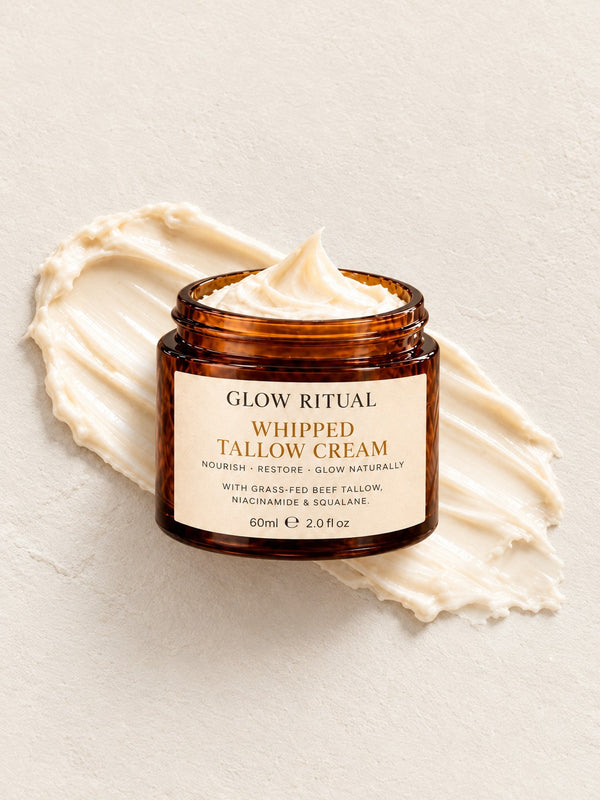
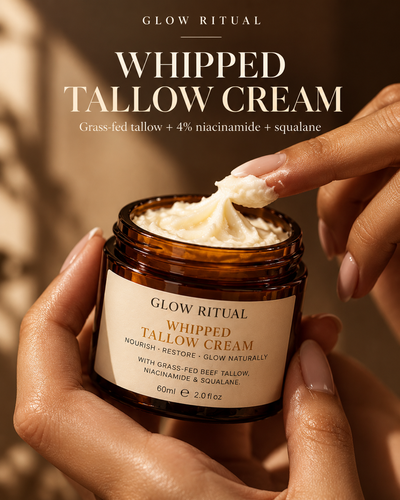
Glow Ritual is the Australian-owned tallow and squalane skincare brand built for this market gap. The formulation combines grass-fed tallow with 4% niacinamide, squalane, shea butter, olive oil, vitamin E, and vanilla extract into a single moisturiser designed for dry, mature, and perimenopausal skin.
What Sets the Formula Apart from Traditional Tallow Balms
Traditional tallow balms are typically single-ingredient products delivering lipids effectively but addressing only occlusion. They don't tackle tone, dullness, or barrier support beyond simple moisture, and tend to be heavy and slow-absorbing, creating the common complaint that tallow feels greasy.
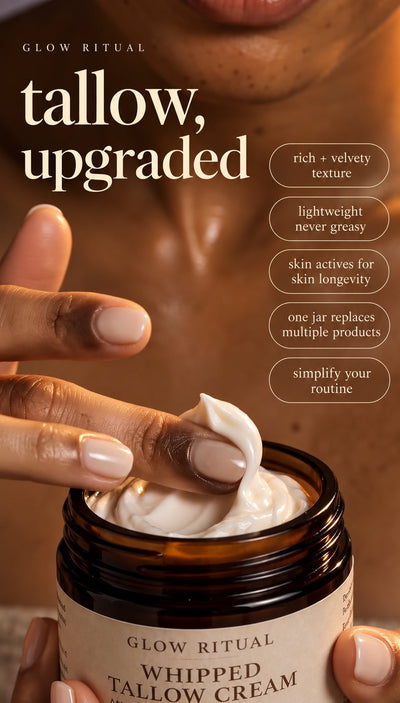
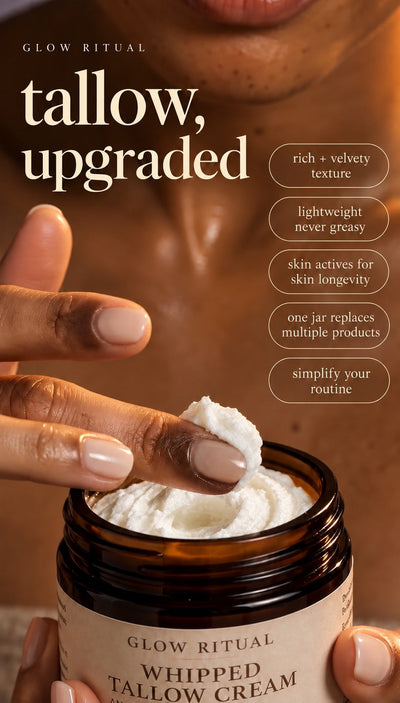
Glow Ritual addresses this directly. The whipped texture and squalane inclusion change absorption significantly. Squalane is one of the lightest skin-compatible lipids, counterbalancing tallow's richness to produce a velvety cream without greasy residue. The 4% niacinamide works on tone and radiance rather than just moisture.
Who the Glow Ritual Moisturiser Is Best Suited For
This moisturiser suits women and men looking for a simple and effective moisturiser that deeply hydrates and nourishes, helping dry skin look smoother, plumper and more radiant, including anyone with dry or barrier-compromised skin.
It's particularly well matched for:
- Skin feeling dry and tight after cleansing
- Skin that feels heavy-coated by traditional balms
- Anyone wanting to reduce product count without sacrificing results
- Skin experiencing dullness, uneven tone, or plumpness loss from hormonal changes
It's also ideal for those who found previous tallow products too heavy. The formulation addresses that specific objection.
One customer noted: "My skin feels hydrated and happy again."
What to Look For When Comparing Tallow Skincare Brands
Most approach this backwards, focusing on "natural" without asking whether formulation actually addresses their needs.
Here's what genuinely matters:
Tallow sourcing. Grass-fed, pasture-raised tallow is the standard. Brands not specifying sourcing often use lower-quality rendered fat lacking nutrient density.
What's combined with tallow. A tallow balm alone is single-function. If you need barrier support, hydration, and tone improvement, look for niacinamide, squalane, or vitamin E indicating broader formulation thinking.
Texture and absorption. Well-formulated tallow shouldn't feel greasy. If a brand can't explain texture solutions, that's a notable gap.
Transparency. Full ingredient lists, sourcing information, and honest descriptions signal brands standing behind formulations.
Return policy. A money-back guarantee signals confidence and removes first-purchase risk for a new category.
According to Cosmetics & Toiletries' overview of lipid-based formulation science, lipid-rich moisturiser efficacy depends significantly on base ingredient quality and composition, not just active presence.
Common Myths About Tallow-Based Skincare (And What the Evidence Shows)
The biggest myth is that tallow is inherently greasy. This comes from unformulated or poorly formulated balms, not tallow itself. When whipped and combined with lighter ingredients like squalane, texture changes substantially, improving absorption and preventing coating.
The second myth is that tallow clogs pores. There is no universally reliable comedogenicity score for tallow; the finished formula and individual skin response matter more. Products combining tallow with silky emollients such as squalane may feel less heavy, but congestion-prone skin should still be introduced to new formulas gradually.
The third myth is that "natural" and "evidence-backed" are opposites. Niacinamide has substantial published research. Squalane is naturally occurring. Tallow has centuries of skin use. These coexist without contradiction.
As documented in the Dermatology Research and Practice journal's review of niacinamide in skincare, niacinamide demonstrates consistent results in improving barrier function, reducing uneven tone appearance, and supporting hydration across multiple study types.
The fourth myth is that tallow skincare suits only very dry skin. A good tallow squalane formulation accounts for variability by being nourishing without occlusion, working on dry days without overwhelming more balanced days.
Navigating skincare changes as we age is difficult, and the market doesn't help. Glow Ritual was built to simplify that decision: one well-formulated moisturiser combining grass-fed tallow, squalane, 4% niacinamide, and supporting botanicals for mature, dry, and changing skin. Get started with Glow Ritual and give your skin the barrier support it's been asking for.
Explore every ingredient in our Face Cream, Cleansing Balm and Body Cream in the Glow Ritual ingredients guide, or read our skin-food philosophy.
Frequently Asked Questions
What are the benefits of combining tallow with squalane in skincare?
Tallow and squalane address different aspects of skin hydration. Tallow is rich in fatty acids that closely resemble the skin's own lipids, helping to restore the barrier and deliver deep nourishment. Squalane is a silky, stable emollient that melts in easily and prevents moisture loss without feeling heavy. Together, they provide both deep conditioning and a smooth, non-greasy finish — which is particularly useful for dry or mature skin that needs serious hydration without clogged pores.
Is tallow skincare suitable for hormonal skin changes?
Tallow-based skincare can suit changing skin well. Hormonal shifts reduce the skin's natural oil production and compromise the barrier, leading to dryness, sensitivity and uneven texture. Tallow's lipid profile is structurally similar to human sebum, which helps replenish what the skin loses. When combined with actives like niacinamide, which supports barrier function and improves uneven tone, a tallow moisturiser can address several hormonal skin concerns in one step.
Can tallow-based moisturisers be velvety and non-greasy?
Yes, though it depends on the formulation. Traditional tallow balms can feel heavy because they contain little else beyond rendered fat. Modern tallow moisturisers that also include squalane, silky plant oils and skin actives absorb more readily and leave a much softer finish. Whipped formulations, in particular, have a lighter texture than solid balms. If previous tallow products felt greasy on your skin, the issue is likely the formulation rather than the tallow itself.
Why is niacinamide added to tallow skincare products?
Niacinamide is a form of vitamin B3 with well-documented effects on the skin barrier, tone and texture. Adding it to a tallow moisturiser means the product does more than hydrate: it also helps improve the look of redness and uneven tone while supporting the skin's barrier over time. For mature skin that deals with dullness and sensitivity alongside dryness, niacinamide makes a tallow formula significantly more useful than one that only addresses moisture.