Squalane vs Shea Butter for Face: Which Suits Your Skin?
By Glow Ritual
Table of Contents
- Squalane vs Shea Butter: Quick Comparison
- What Squalane and Shea Butter Do for Your Skin
- Squalane vs Shea Butter for Dry Skin
- Can You Use Squalane and Shea Butter Together?
- How to Layer Squalane in a Skincare Routine
- Squalane or Shea Butter for Acne-Prone Skin
- Why Glow Ritual Combines Both Ingredients
- Conclusion
- Frequently Asked Questions
Last Updated: October 8, 2026
Squalane vs Shea Butter: Quick Comparison
Choosing between squalane and shea butter for your face comes down to your skin's specific needs and how these ingredients work. Both are popular in skincare, but they behave quite differently on mature and dry skin. Squalane is a silky, fast-absorbing oil that mimics your skin's natural sebum, whilst shea butter is a richer, more occlusive ingredient that sits on the skin's surface longer. Neither is inherently "better", the right choice depends on your skin type, climate, and how much nourishment your barrier needs.
| Feature | Squalane | Shea Butter |
|---|---|---|
| Texture | Silky, fast-absorbing oil | Rich, creamy balm |
| Absorption Speed | Fast (minutes) | Slower (sits longer) |
| Best For | All skin types, especially oily-prone | Dry, mature, compromised barriers |
| Feeling on Skin | Non-greasy, smooth | Luxurious, potentially heavy |
| Layering | Works under other products | Usually final step |
What Squalane and Shea Butter Do for Your Skin
Squalane and shea butter both support skin hydration and barrier health, but through different mechanisms. Understanding how each works helps you decide which suits your routine, or whether you need both.
How Squalane Works
Squalane is a plant-derived hydrocarbon that closely mirrors squalene, an oil your skin naturally produces. Because it's so similar to your skin's own lipids, it absorbs quickly without leaving a greasy residue. Squalane works by penetrating the outer layers of skin and helping it retain moisture, whilst also providing a silky protective layer. For mature skin experiencing natural lipid loss, squalane delivers hydration without the heavy feel of traditional oils.
The beauty of squalane is its versatility. It plays well with other ingredients, making it ideal for layering in multi-step routines or for people who prefer to keep their skincare simple. Many find it particularly useful in morning routines because it absorbs fast enough for makeup application.
How Shea Butter Works
Shea butter is a plant-based fat extracted from the shea nut. It's rich in fatty acids and vitamins that nourish and condition skin. Unlike squalane, shea butter is occlusive, it forms a protective barrier on the skin's surface that prevents moisture loss. This makes it particularly effective for very dry or compromised skin barriers that need intense, long-lasting nourishment.
Shea butter contains natural compounds that support skin softness and can help soothe irritation. Because it sits on the skin longer than squalane, it provides extended conditioning throughout the day or night. For people experiencing perimenopause or menopause-related dryness, shea butter's heavier texture often feels more satisfying and protective.
The trade-off is texture. Shea butter's richness means it may feel heavy on some skin types, particularly if you have active breakouts or oily-prone areas. It also takes longer to absorb, so timing matters in your routine.
Squalane vs Shea Butter for Dry Skin
For dry skin, both ingredients help, but in different ways. Squalane delivers silky hydration that penetrates quickly, whilst shea butter provides intensive conditioning that stays on the surface longer.
If your dryness is mild to moderate and you dislike heavy textures, squalane alone may be sufficient. It hydrates effectively without the occlusive feel. However, if your skin is severely dry, flaky, or experiencing barrier damage, common during hormonal changes, shea butter's richer profile often delivers more noticeable relief.
Many people with mature, dry skin find they need both. Squalane hydrates from within, and shea butter seals that hydration in place. This layering approach is particularly effective for skin that's struggling with both dryness and sensitivity.
Can You Use Squalane and Shea Butter Together?
Yes, you can absolutely combine squalane and shea butter in the same routine. In fact, many people find this combination more effective than either ingredient alone, particularly for mature or severely dry skin.
The typical approach is to apply squalane first on damp skin, allowing it to absorb, then layer shea butter on top. Squalane penetrates and hydrates, whilst shea butter seals everything in and provides additional nourishment. This method maximises the benefits of both ingredients without the routine feeling heavy.
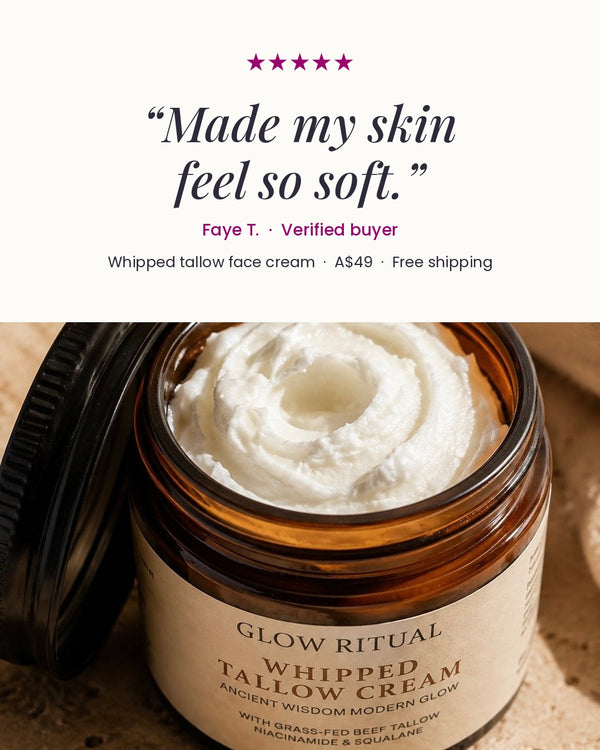
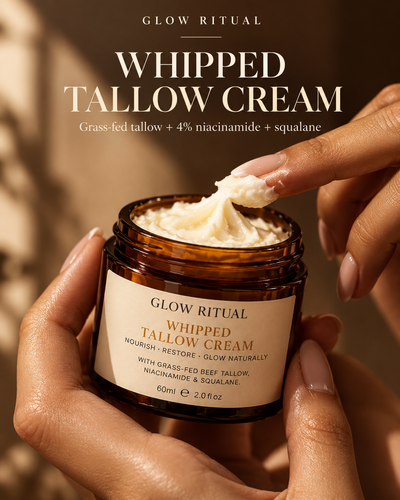
Some formulations combine these ingredients in a single product. This approach simplifies your routine whilst delivering both hydration and occlusion in one step. Glow Ritual's Skin Longevity Whipped Tallow Face Cream, for example, blends grass-fed tallow with 4% niacinamide and squalane, creating a velvety yet nourishing moisturiser that delivers the benefits of both without requiring separate application steps.

The key is using the right amount. Start with less than you think you need, a pea-sized amount of squalane and a slightly larger amount of shea butter can cover the entire face. Layering too much of either ingredient can feel heavy or lead to product pilling.
How to Layer Squalane in a Skincare Routine
Squalane's silky nature makes it flexible for layering. The general rule is to apply products from thinnest to thickest consistency, which means squalane typically comes before heavier creams or butters.
Morning routine: Cleanse, apply any water-based serums or treatments, then squalane, then SPF. Squalane absorbs quickly enough that makeup can go on within minutes.
Skin Longevity Whipped Tallow Face Cream →
Evening routine: Cleanse, apply serums or treatments, then squalane, then a heavier cream or shea butter if needed. Because you're not applying makeup, you have more flexibility with layering order.
If you're using squalane with niacinamide, a common pairing for mature skin, apply the niacinamide serum first, then squalane. Niacinamide is water-based and works best on clean, damp skin, whilst squalane works as a sealing layer.
Squalane or Shea Butter for Acne-Prone Skin
This is where the two ingredients diverge most significantly. Squalane is generally safer for acne-prone skin because it's silky and non-comedogenic, it doesn't typically clog pores. Many people with breakout-prone skin tolerate squalane well, even when other oils cause congestion.
Shea butter, being heavier and more occlusive, carries a higher risk of triggering breakouts in acne-prone individuals. Its richness can feel suffocating to skin that's already producing excess sebum or prone to congestion. That said, not everyone reacts the same way. Some people with acne-prone skin use shea butter without issues, particularly if they use it sparingly or only in very dry areas.
If you have acne-prone skin, start with squalane. It delivers hydration without the congestion risk. If your barrier is severely compromised and you feel you need something richer, patch-test shea butter on a small area first, perhaps just on dry patches, before committing to full-face application.
The safest approach for breakout-prone skin is to use a single, well-formulated moisturiser designed for your specific needs rather than layering multiple rich ingredients. This reduces the variables that might trigger congestion.
Why Glow Ritual Combines Both Ingredients
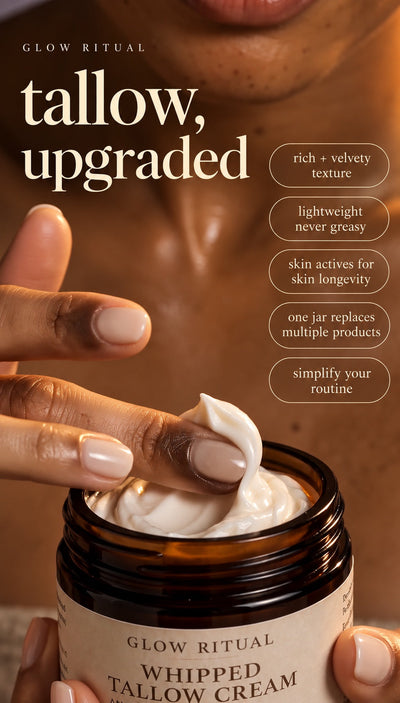
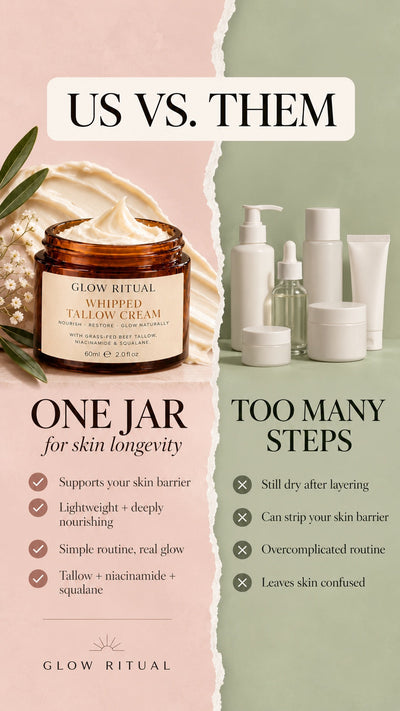
Rather than asking you to choose between squalane and shea butter, Glow Ritual combines both in a single, precision-formulated moisturiser. The Skin Longevity Whipped Tallow Face Cream blends grass-fed tallow with 4% niacinamide and squalane in a velvety formula that delivers the benefits of both without the heaviness of traditional tallow balms.
The reasoning is straightforward: mature skin experiencing hormonal changes needs both hydration and barrier support. Squalane provides the silky moisture that absorbs quickly, whilst shea butter delivers the deeper conditioning that supports skin barrier repair. Grass-fed tallow adds additional lipid support that mirrors your skin's own fatty acids, which naturally decline with age.
Niacinamide, the active ingredient in the formula, helps improve skin tone and texture, addressing concerns beyond simple dryness. This combination approach means you're not choosing between ingredients; you're getting a formula designed for the specific needs of mature, dry, and changing skin.
At $49, the Skin Longevity Whipped Tallow Face Cream replaces multiple products in a typical routine. For people tired of complicated multi-step routines, this simplification is often the most valuable benefit.
Conclusion
Squalane and shea butter both support skin hydration and barrier health, but they work differently. Squalane is silky and fast-absorbing, making it ideal for all skin types and particularly useful for people who dislike heavy textures. Shea butter is richer and more occlusive, delivering intensive conditioning that's especially valuable for severely dry or compromised skin.
You don't have to choose between them. Many people find combining both, either through separate products or a single formulation, delivers the best results for mature, dry skin. If you're looking for a simplified routine that includes both ingredients, Get The Glow with Glow Ritual's Skin Longevity Whipped Tallow Face Cream. It combines squalane and grass-fed tallow with 4% niacinamide in a velvety formula designed specifically for dry, mature, and changing skin. With a 30-day money-back guarantee, you can test whether this combination works for your barrier without risk.
Frequently Asked Questions
Is squalane or shea butter better for your face?
Neither is universally better, it depends on your skin's needs. Squalane is silky, absorbs quickly and suits most skin types including oily and acne-prone skin. Shea butter is richer, deeply nourishing, and better for very dry or mature skin. For dry, changing skin through perimenopause and menopause, a formula combining both (like Glow Ritual's Skin Longevity Whipped Tallow Face Cream, which contains squalane) offers the best of both: squalane's silky hydration plus deep conditioning.
Can you use squalane and shea butter together in your skincare routine?
Yes, absolutely. Squalane and shea butter work well together because they address different needs. Squalane provides silky moisture and helps skin absorb other products, whilst shea butter delivers richer conditioning and barrier support. Using them together is particularly effective for mature or compromised skin that needs both hydration and nourishment without feeling heavy. Many formulations, including Glow Ritual's moisturiser, combine squalane with other nourishing ingredients for this reason.
Is shea butter too heavy for facial skin?
Shea butter can feel heavy on some skin types, especially if used alone or in high concentrations. However, when combined with lighter ingredients like squalane, it becomes more spreadable and absorbs better. If you have oily or acne-prone skin, use shea butter sparingly or choose a formula where it's balanced with fast-absorbing actives. For dry and mature skin, shea butter's richness is usually an asset, not a drawback.
Which ingredient is better for very dry or mature skin?
For very dry or mature skin, shea butter alone offers deeper conditioning, but squalane is often the better choice because it absorbs quickly without leaving a greasy feel. The ideal approach is using both together. Mature skin benefits from squalane's silky hydration and shea butter's barrier-supporting fats. Glow Ritual's Skin Longevity Whipped Tallow Face Cream combines squalane and grass-fed tallow specifically to address the dryness and barrier weakness common in menopausal and perimenopausal skin.