Skin Protection vs Barrier Repair: Which Works Best
By Glow Ritual
Table of Contents
- The Core Difference: Protecting Skin vs Repairing the Barrier
- How to Repair a Damaged Skin Barrier
- Niacinamide for Skin Barrier Repair: What the Evidence Shows
- Incorporating Squalane Into a Night-time Skincare Routine
- A Skin Barrier Repair Routine for Dry Skin
- Can One Product Do Both? Protection and Repair Together
- Conclusion
- Frequently Asked Questions
Last Updated: October 17, 2026
The Core Difference: Protecting Skin vs Repairing the Barrier
Your skin barrier is made of lipids. These are the fats your skin produces naturally to hold moisture in and keep irritants out. When you're in your 40s or 50s, especially if you're going through perimenopause or menopause, your skin makes fewer of these lipids. That's when the difference between protecting and repairing becomes critical.
Protecting skin means creating a shield on the surface. You apply products that sit on top and prevent water loss. Repairing the barrier, by contrast, means feeding your skin the lipids it's stopped making itself, so it can function properly again from the inside out. Both matter, but they work in fundamentally different ways.
At Glow Ritual, we focus on barrier repair because that's what mature, dry skin actually needs. A product that merely protects won't address why your skin feels tight and dull in the first place. You need to restore what's missing.
Here's where most skincare routines get it wrong: they layer protective products without addressing the underlying damage. You end up with a barrier that still can't hold moisture, so you need more and more product. It's expensive, it's frustrating, and it doesn't work.
The evidence is straightforward. Your skin barrier needs lipids to repair. Niacinamide helps improve the appearance of uneven tone and texture. Squalane delivers silky moisture. Together, these actives work with lipid-rich ingredients like tallow to rebuild what menopause has taken away. Protection alone cannot do that.
How to Repair a Damaged Skin Barrier
A damaged barrier shows up as tightness, flaking, redness, and that constant feeling that nothing you apply is ever enough. If your skin feels this way, you need to stop adding complexity and start feeding it what it's missing.
The first step is to strip back to basics. Stop using products with fragrance, essential oils, or active ingredients that can irritate. Your barrier is already compromised, so anything harsh will make it worse. This is not the time to introduce retinol or vitamin C serums.
Second, introduce lipids consistently. Apply a lipid-rich moisturiser morning and night. Your skin barrier is made of lipids, so this is not optional. A lightweight formula that absorbs quickly works better than heavy balms that sit on the surface. You want the lipids to actually penetrate and support the barrier, not just coat it.
Third, give it time. Barrier repair is not fast. Most people see meaningful improvement within 4 to 6 weeks of consistent use. If you switch products every few days, you won't know what's working.
Fourth, support hydration from inside. Drink water. Sleep properly. These are not skincare hacks, but they directly affect how well your barrier can function.
| Step | Action | Timeline | Frequency |
|---|---|---|---|
| 1 | Remove irritating products | Immediate | Once |
| 2 | Introduce lipid-rich moisturiser | Day 1 | Twice daily |
| 3 | Wait for results | 4-6 weeks | Ongoing |
| 4 | Support with hydration and sleep | Ongoing | Daily |
Niacinamide for Skin Barrier Repair: What the Evidence Shows
Niacinamide is a form of vitamin B3 that helps improve the appearance of uneven skin tone and texture. It's not a moisturiser on its own, but it's a powerful active that supports barrier function when combined with the right base.
What makes niacinamide useful for barrier repair is that it helps regulate sebum production and supports the skin's natural lipid profile. For mature skin that's struggling, this means your skin can work more efficiently to hold onto the moisture you're giving it.
The key is concentration. Most skincare products use niacinamide at 2 to 5 percent. At this range, it's effective without irritation. Below 2 percent, you're not getting the benefit. Above 5 percent, some people report sensitivity.
When you're repairing a damaged barrier, niacinamide works best as part of a formula that also contains lipids. On its own, it cannot repair the barrier. But paired with tallow, squalane, and plant oils, it helps your skin look smoother and more even whilst the lipids do the deeper work of barrier restoration.
According to research on niacinamide and skin health, the ingredient has been shown to support the skin's natural moisture barrier. This is why it's become standard in barrier-repair formulations.
Incorporating Squalane Into a Night-time Skincare Routine
Squalane is a lightweight oil derived from plant sources that mimics the squalane your skin produces naturally. It's not greasy, it absorbs quickly, and it delivers silky moisture without heaviness.
The reason squalane works so well at night is that your skin repairs itself whilst you sleep. Applying squalane before bed gives your barrier the lipids it needs to work through the night. You wake up with softer, more hydrated skin.
How to use it: apply your moisturiser first, then add a few drops of squalane on top. Warm it between your palms and press it in gently. The combination of a lipid-rich cream plus squalane creates a moisture-lock that lasts through the night.
Some people worry that adding oil on top of a cream will feel greasy. It won't, because squalane is so lightweight. It feels silky, not oily. Your skin absorbs it within minutes.
For mature skin in particular, squalane is essential. As your skin ages, it loses its natural squalane production. Replacing it topically helps maintain that plump, dewy look that menopause tends to steal.
Whipped Tallow Cream – Grass-Fed Tallow • 4% Niacinamide • Squalane • Shea • →
A Skin Barrier Repair Routine for Dry Skin
If your skin is genuinely dry, not just dehydrated, but structurally lacking lipids, your routine needs to be simple and consistent.
Morning: Apply a small amount of a lipid-rich moisturiser to clean, slightly damp skin. Press it in gently and let it absorb for a minute. Follow with SPF. That's it. Do not layer serums or essences. Your barrier is already compromised, so keep it simple.
Night: Apply the same moisturiser, using slightly more than you would in the morning. Add a few drops of squalane on top if your skin feels particularly tight. This is your barrier-repair window. Give your skin the lipids it needs to rebuild overnight.
Weekly: Once a week, apply your moisturiser to damp skin and leave it on for 10 minutes before gently removing any excess. This gives your barrier time to absorb the lipids without the pressure of a rushed routine.
The reason this works is consistency and simplicity. You're not confusing your barrier with multiple active ingredients. You're just feeding it what it's missing: lipids, and more lipids. That's the entire strategy.
Many people find that after 6 to 8 weeks of this routine, they can introduce other products if they want to. But most discover they don't need to. A single hardworking moisturiser that combines lipids with niacinamide and squalane can be enough.
Can One Product Do Both? Protection and Repair Together
This is the question that separates marketing from reality. Can a single product protect your skin barrier and repair it at the same time?
Yes, but only if it's formulated correctly.
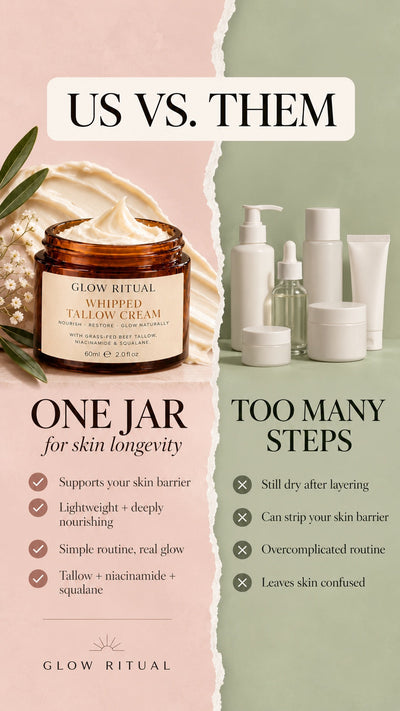
A product that merely sits on the surface and protects will not repair. A product that only repairs without protecting will not stop water loss. You need both functions in one formula: lipids that repair the barrier from within, plus a protective layer on top.
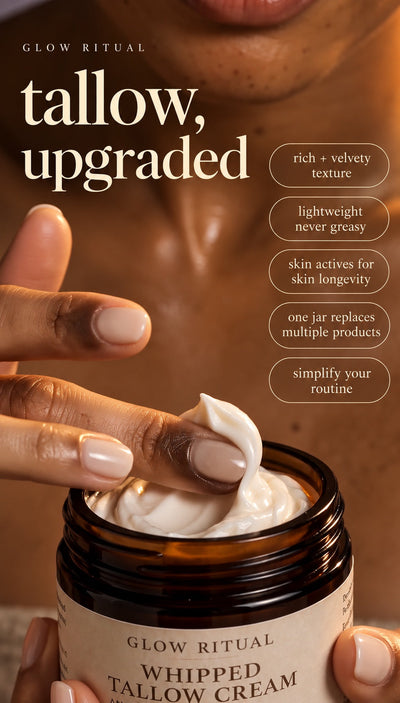
This is why formulation matters so much. A lightweight tallow moisturiser with niacinamide and squalane delivers protection through the lipid content and repair through the combination of tallow, niacinamide, and plant-derived actives. It's not one or the other. It's both, working together.
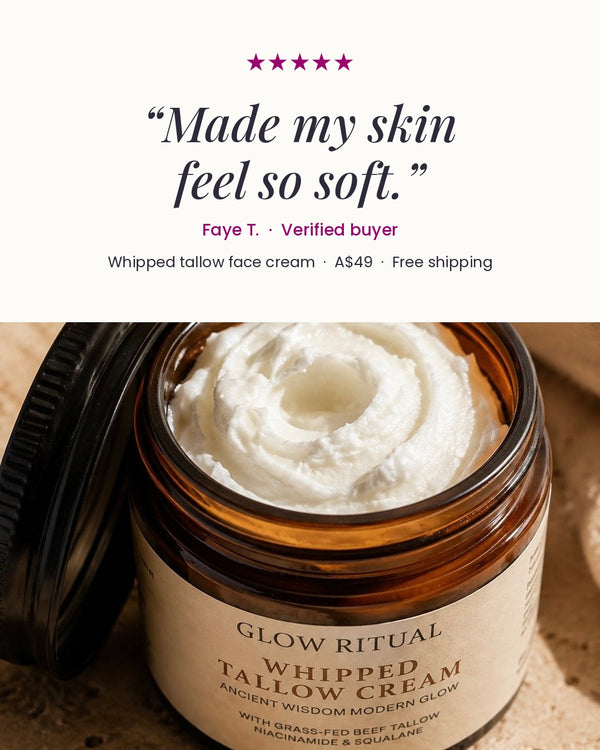
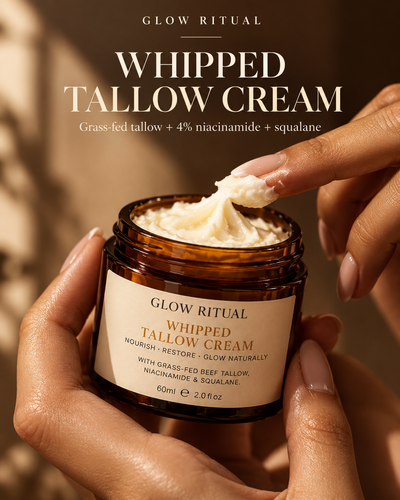
The Whipped Tallow Cream from Glow Ritual is designed exactly this way. Grass-fed tallow provides the lipid foundation for barrier repair. Niacinamide at 4 percent supports skin tone and texture. Squalane adds silky moisture and protection. Shea butter and olive oil provide additional nourishing lipids. The result is a single product that repairs whilst it protects, with no greasy residue.

This matters because most people don't have time for a ten-step routine. If you're going through perimenopause or menopause and your skin is changing rapidly, simplicity is not a luxury. It's a necessity. One product that does both protection and repair means you're more likely to use it consistently, which is what barrier repair actually requires.
Conclusion
The difference between protecting skin and repairing the barrier comes down to this: protection stops water loss. Repair restores what your skin has stopped making. For mature, dry skin, you need both, and the best formulas deliver them together.
If your skin feels tight, dull, and nothing seems to help, you're likely dealing with a compromised barrier. The solution is not more products. It's the right product: one that's lipid-rich enough to repair, active enough to improve tone and texture, and simple enough to use every single day without thinking about it.
The Whipped Tallow Cream combines grass-fed tallow, 4% niacinamide, squalane, and nourishing botanicals to do exactly that. It's designed for skin like yours, changing, dry, and tired of complicated routines. Get The Glow and experience what barrier repair actually feels like: softer, plumper, more radiant skin that finally holds onto moisture the way it should.
Frequently Asked Questions
What is the difference between soothing skin and repairing the skin barrier?
Soothing skin calms inflammation and discomfort on the surface, offering immediate relief from irritation or sensitivity. Barrier repair goes deeper, rebuilding the lipid structure that holds moisture in and protects against irritants. A product can do both: soothe inflamed skin whilst simultaneously strengthening the barrier with lipids and actives like niacinamide. True barrier recovery requires consistent moisture and lipid support over weeks, not just momentary comfort.
Can squalane help support the skin barrier?
Yes. Squalane is a lightweight plant-derived lipid that mimics skin's natural oils, helping to lock moisture into the barrier without feeling heavy or greasy. When incorporated into a night-time routine, squalane works alongside other barrier-supporting ingredients to restore the lipid layer that weakens with age and environmental stress. It's particularly effective for dry, mature skin because it provides sustained hydration without the occlusive feel of heavier oils.
What does niacinamide do for the skin barrier?
Niacinamide (vitamin B3) supports barrier repair by helping skin maintain its natural lipid production and reducing moisture loss. At concentrations like 4%, it can help improve the appearance of uneven tone and texture whilst strengthening the barrier's resilience. For dry or compromised skin, niacinamide works best alongside lipid-rich moisturisers that provide the foundational nourishment the barrier needs to recover.
How long does it take for a damaged skin barrier to recover?
Most people notice visible improvement in barrier function within 2-4 weeks of consistent use of a barrier-repair moisturiser. Full recovery, where skin feels comfortable, hydrated and resilient, typically takes 6-8 weeks of daily application, depending on the severity of damage and individual skin response. Consistency matters more than speed; using the right product every morning and night yields better results than sporadic use of multiple products.