Tallow vs Plant Oils for the Face: Compare the Formula, Not the Hype
By Glow Ritual
Share
There is no universal winner between tallow and plant oils for facial skincare. Both can contribute emollient ingredients to a moisturiser. The better choice is the finished product that suits your skin, preferences and routine.
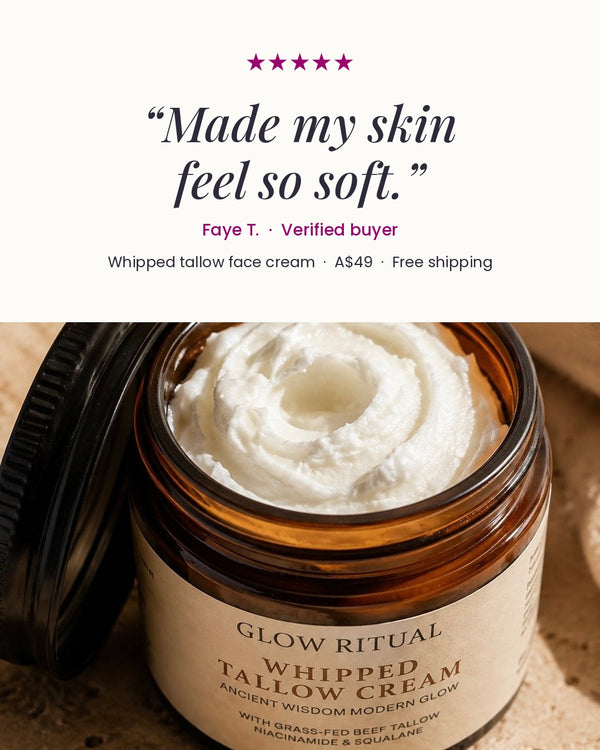
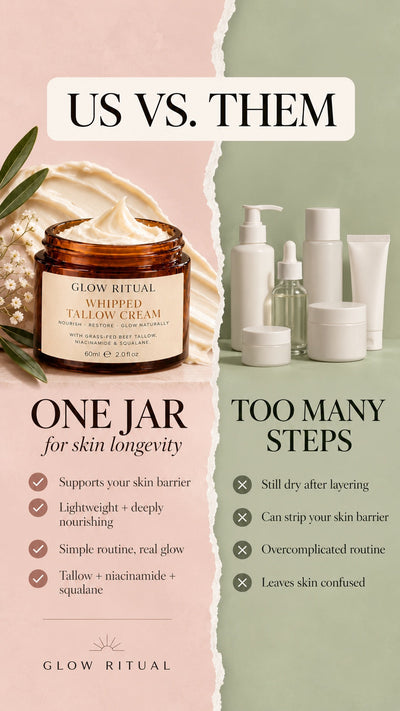
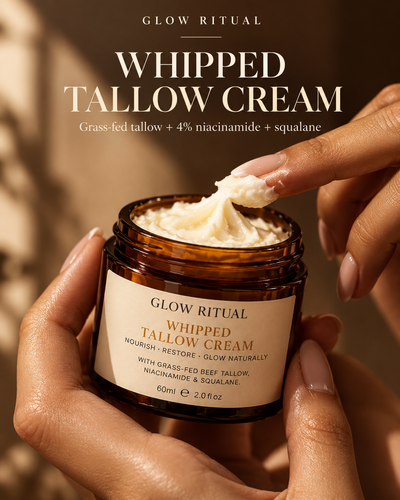
At Glow Ritual, the two categories are part of the same formula: our moisturiser combines grass-fed beef tallow with plant ingredients including olive oil and shea butter, alongside squalane and 4% niacinamide.
Start with what you are actually comparing
Tallow is rendered animal fat. Plant oils come from botanical sources, and they vary considerably. Comparing a pure oil with a multi-ingredient face cream tells you more about those two products than about every ingredient in either category.
Ask whether the product is waterless or an emulsion, what else it contains, and how it feels at the recommended amount. A “natural” label is not a substitute for that information.
Does tallow match the skin's own oils?
Tallow contains fatty acids, but sharing some components with skin lipids does not mean it is identical to sebum or a complete replacement for the skin barrier. Nor does that similarity prove it will work better than plant oils or a conventional moisturiser.
Claims about an ingredient's composition should also be kept separate from evidence about skincare results. A study comparing the nutritional composition of grass-fed and grain-fed beef is not a clinical trial showing that a tallow face cream improves mature skin.
Which feels less greasy?
You cannot reliably rank every tallow product above or below every plant oil. Concentration, the other ingredients, processing and how much you apply all affect the finish. Using more than your skin needs can make even a product you normally like feel heavy.
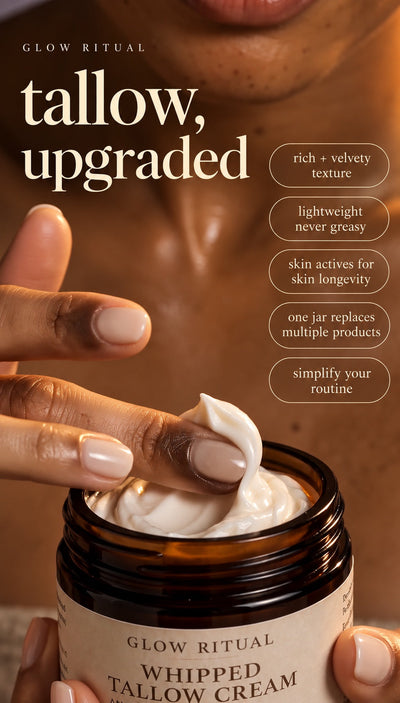
Glow Ritual is a rich cream with a velvety, non-greasy feel. Start with a small amount and assess it on your own skin rather than treating that description as a promise of the same experience for everyone. Read our practical guide to tallow and greasiness for more.
Can either cause breakouts or irritation?
Yes, an individual may react to a product from either category. There is no blanket non-comedogenic guarantee for tallow, and a single ingredient rating cannot establish how a complete formula will behave on your face.
Do not assume that quick absorption means a product cannot clog pores. Equally, a rich texture alone does not tell you it will cause a breakout. Check the full ingredient list and introduce products carefully, particularly if your skin is reactive or acne-prone.
What about mature or changing skin?
Dryness can make a comfortable moisturiser especially useful, but it does not mean you must choose an animal-derived ingredient. A tallow-based product, a plant-based moisturiser or another well-formulated cream may suit you. Your skin's response is more helpful than a rule based only on age.
There is no need to frame plant oils as ingredients that “evaporate quickly” or cannot support dry skin. Different oils behave differently, and broad claims like these overlook the complete formulation.
Four questions before buying
- Does the origin fit my preferences? Beef tallow is animal-derived, so it is not vegan.
- Can I see the full ingredients? Consider the whole blend, including ingredients you know you react to.
- Is the product making realistic promises? Moisturising and a softer feel are different from guaranteed barrier repair or treatment of a skin condition.
- Does it fit my routine? A moisturiser can simplify one step without replacing cleansing, sunscreen or prescribed care.
Our guide to choosing a tallow moisturiser explains what to check beyond the headline ingredient.
A simpler moisturising ritual. Explore Glow Ritual Tallow Face Moisturiser with 4% Niacinamide + Squalane and check the full ingredient information before choosing your next jar.
Further reading: FDA guidance on cosmetic ingredient labels. A natural source alone does not determine a product's safety.