Tallow Balm vs Face Cream: What’s the Difference for Mature Skin?
By Glow Ritual
Table of Contents
- Tallow Balm vs Face Cream: The Key Differences
- Benefits of Grass-Fed Tallow for Face Skin
- How Traditional Face Creams Work (And Where They Fall Short)
- Niacinamide and Tallow Skincare Benefits Combined
- Why Tallow Balm Works Better for Menopausal and Mature Skin
- Buying Grass-Fed Tallow Moisturiser Online: What to Look For
- Conclusion
- Frequently Asked Questions
Last Updated: 27 September 2026
Tallow Balm vs Face Cream: The Key Differences
When your skin changes through your 40s and 50s, the products that worked for decades suddenly stop delivering. That's when the choice between tallow balm and face cream becomes urgent. Both claim to hydrate mature skin, but they work in fundamentally different ways.
Tallow balm is a lipid-rich formulation built on grass-fed beef fat, which contains a fatty acid profile remarkably similar to your skin's natural sebum. Face cream, by contrast, typically combines water with emulsifiers and synthetic moisturisers to create a lighter texture. The difference isn't just cosmetic, it affects how deeply your skin absorbs nourishment and whether your barrier actually strengthens over time.
At Glow Ritual, we've spent years understanding why mature skin responds so differently to these two categories. The answer lies in how each formula interacts with a compromised or changing skin barrier. Traditional tallow balms can feel heavy and greasy, leaving skin looking slick rather than radiant. Modern formulations, like those combining grass-fed tallow with well-researched skin actives, offer a third way: the barrier-supporting benefits of tallow without the greasy feel.
This comparison matters because choosing the wrong moisturiser at this stage of life can either accelerate skin dryness or finally give you the relief you've been searching for.

Benefits of Grass-Fed Tallow for Face Skin
Grass-fed tallow delivers something synthetic creams simply cannot: a lipid complex that your skin recognises as its own. Tallow contains palmitic acid, stearic acid, and oleic acid in proportions that mirror your skin's natural lipid barrier. This isn't marketing language, it's basic biochemistry that explains why many women find tallow more nourishing than conventional creams.
For drier menopausal skin, the main advantage of a richer balm is reduced moisture loss and improved comfort. As oestrogen declines, your skin loses its natural ability to hold moisture (pubmed.ncbi.nlm.nih.gov). Tallow's dense lipid structure seals in hydration at the cellular level, rather than just sitting on the surface the way many water-based creams do. Through perimenopause and menopause, a consistent, lipid-rich routine can help dry skin feel softer and more comfortable.
Vitamin content in rendered tallow can vary, so it is more useful to focus on the finished formula than assume a predictable vitamin dose. These nutrients are absorbed more efficiently by skin than many synthetic alternatives because they're delivered in a lipid matrix your skin naturally processes.
The texture concern is real. Traditional tallow balms can feel heavy and occlusive, sitting on the skin rather than absorbing. This is where formulation matters enormously. When tallow is blended with lighter actives and plant-derived squalane, it becomes silky and velvety whilst maintaining all the barrier-support benefits. The result is nourishment without the greasy finish that made older tallow products impractical for daily use.
How Traditional Face Creams Work (And Where They Fall Short)
Most conventional face creams are water-based emulsions: water mixed with oil, held together by emulsifiers, then stabilised with preservatives and thickeners. They're designed to feel light and absorb quickly, which is why they've dominated the skincare market for decades. For young skin with a functioning barrier, this approach works reasonably well.
But mature skin is a different landscape. When your skin barrier is compromised, which happens naturally with age and hormonal change, water-based formulas create a temporary hydration boost that evaporates within hours. The water absorbs, the emollients spread thinly, and by evening your skin feels tight again. This cycle forces many women into multi-step routines: serum, essence, cream, oil, eye balm. Each product is supposed to compensate for what the previous one couldn't deliver.
Face creams vary widely. Many modern formulas are specifically designed to support the skin barrier as well as reduce moisture loss. They hydrate the surface layer of skin temporarily but don't provide the dense lipid support that a compromised barrier genuinely needs to function independently again.
Water-based creams also tend to include preservatives and emulsifiers that not every skin type enjoys. For women in perimenopause with unpredictable skin reactivity, this is a genuine concern. Tallow-based formulations, by contrast, are naturally stable and require minimal preservation, reducing the irritation risk significantly.
Niacinamide and Tallow Skincare Benefits Combined
This is where modern tallow formulations become genuinely different from both traditional tallow balms and conventional creams. Niacinamide (vitamin B3) is one of the most evidence-backed skincare actives available. It supports the skin barrier and helps improve the look of redness, oiliness and uneven texture. On its own, niacinamide is effective. Combined with tallow, it makes a well-rounded daily moisturiser.
Here's why the combination works: niacinamide addresses barrier function at the cellular level, it stimulates ceramide production and improves skin's natural moisturising factor. Tallow provides the lipid matrix those ceramides need to function properly. Together, they create a synergistic effect that neither ingredient achieves alone. Your skin barrier doesn't just feel better temporarily; it actually becomes more resilient.
Niacinamide also brightens skin tone and reduces the appearance of enlarged pores, concerns many women experience as skin thins and loses elasticity through menopause. The combination of barrier support (from tallow) plus visible brightening (from niacinamide) addresses both the underlying skin health problem and the aesthetic concerns that matter to you.
When formulated correctly, at a concentration of 4% niacinamide blended with grass-fed tallow and complementary actives like squalane, this combination simplifies your entire routine. One moisturiser can simplify the moisturising step, while sunscreen and any prescribed or targeted treatments still have separate roles.
Why Tallow Balm Works Better for Menopausal and Mature Skin
The physiological changes happening in your skin through perimenopause and menopause are significant. Oestrogen supports collagen production, maintains skin elasticity, and helps your skin retain moisture. As oestrogen declines, all three of these functions weaken. Your skin becomes drier, thinner, and less plump, no amount of conventional face cream can reverse that process because the problem isn't just surface hydration.
Tallow addresses this at a deeper level. The lipid-rich structure of grass-fed tallow supports your skin's own barrier function, meaning your skin can hold onto moisture more effectively even as its natural ability to produce it declines. This is why many women enjoy a richer tallow cream during perimenopause and menopause.
The hormonal context also matters for skin reactivity. Menopausal skin is often unpredictable, dry one day, reactive the next, less tolerant of products that worked for years. A simple routine with fewer, well-made products makes these unpredictable days easier to manage. There are no emulsifiers breaking down the skin barrier, no preservatives causing irritation, no fragrance or synthetic actives creating unexpected reactions.
Women experiencing menopausal skin changes also benefit from tallow's ability to support skin plumpness and radiance. As skin loses oestrogen-dependent elasticity, the lipid nourishment from tallow helps skin look smoother and more luminous, not through unrealistic anti-ageing promises, but through genuine barrier support that allows skin to function and look its healthiest at this stage of life.
Buying Grass-Fed Tallow Moisturiser Online: What to Look For
Not all tallow moisturisers are equal. When shopping online, several factors separate genuinely effective products from marketing-heavy alternatives that disappoint.
Sourcing matters. Grass-fed, pasture-raised tallow is nutritionally superior to grain-fed alternatives. Grass-fed sourcing can influence the fatty-acid profile, but finished-product performance still depends on the whole formula. Look for brands that explicitly state their tallow source and farming practices. If the sourcing isn't mentioned, that's a red flag.
Formulation approach is critical. Traditional tallow balms are often heavy and occlusive because they're formulated at high temperatures that damage the tallow's naturally occurring lipids and nutrients. Low-heat formulation (below 45°C) preserves the tallow's beneficial compounds.
| Consideration | What to Look For | Why It Matters |
|---|---|---|
| Tallow sourcing | Grass-fed, pasture-raised | Superior fatty acid profile and nutrient density |
| Formulation temperature | Below 45°C | Part of the brand’s low-temperature manufacturing approach |
| Actives included | Niacinamide, squalane, or ceramides | Enhances barrier support beyond tallow alone |
| Texture | Silky, melt-in, not greasy | Practical for daily use on mature skin |
| Ingredient list | Short, recognisable, minimal preservatives | Easier to check what you are putting on your skin |
Conclusion
The choice between tallow balm and face cream isn't really about tradition versus modernity. It's about whether your mature skin needs the deep lipid support that only tallow provides, or whether a lighter water-based formula is sufficient for your barrier's current state.

Shop the ritual
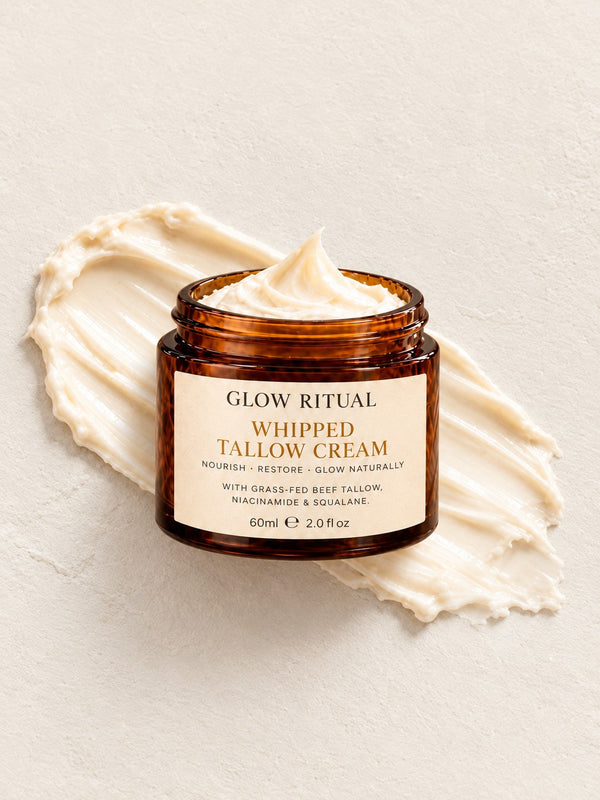
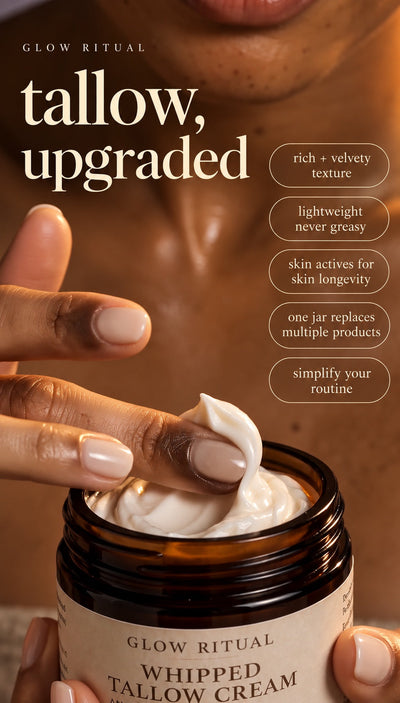
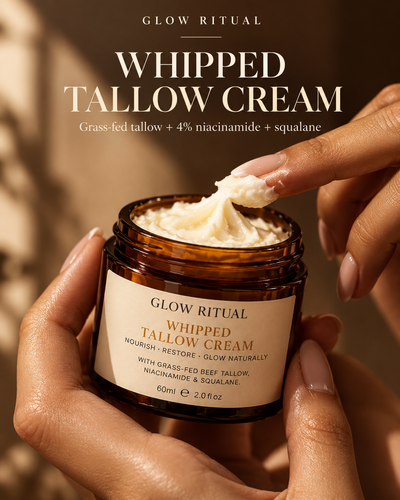
NZ grass-fed tallow, 4% niacinamide and squalane, whipped into a rich, velvety cream that never feels greasy. One jar, morning and night, for dry, mature and changing skin.
Shop Whipped Tallow CreamFrequently Asked Questions
Is tallow balm better than standard face cream for dry skin?
Tallow balm and face cream work differently on dry skin. Tallow contains lipids that closely match your skin's natural composition, making it highly absorbable and restorative for compromised barriers. Standard face creams often rely on water and emulsifiers, which can feel heavy without delivering the same lipid support. For mature, dry skin, especially during menopause, tallow balm typically performs better because it addresses the underlying lipid loss that causes dryness, rather than just sitting on the surface.
What makes niacinamide and tallow skincare benefits work together?
Niacinamide (vitamin B3) strengthens skin barrier function and reduces moisture loss, whilst tallow provides a rich emollient base that helps reduce moisture loss. Together, they address dry skin from two angles: niacinamide tells your skin to hold onto water better, and tallow supplies the fats needed to seal that moisture in. This combination is especially valuable for mature skin, where both barrier support and active nourishment matter.
Does tallow clog pores compared to traditional moisturisers?
No moisturiser can be guaranteed not to clog pores for every person. Formula, amount used and individual skin response all matter. Face creams vary widely. Some rich formulas may feel too occlusive for congestion-prone skin, while others are specifically designed to feel light and non-greasy. Whipped tallow formulas, especially those blended with actives like niacinamide and squalane, absorb quickly without leaving a greasy residue or blocking pores. If you've had issues with tallow before, the formula matters: low-heat processing and the inclusion of skin actives make a significant difference.
Can I use grass-fed tallow as a daily facial moisturiser?
Yes, grass-fed tallow is suitable for daily use on the face when formulated as a velvety moisturiser. Unlike heavy balms, modern tallow moisturisers with actives like niacinamide and squalane absorb quickly and work well under makeup. Many people with mature, dry or menopausal skin find one daily application, morning and evening, is all they need, replacing a multi-step routine with a single, effective step.