Perimenopause Skin Changes & Acne: What's Happening
By Glow Ritual
Table of Contents
- Why Perimenopause Causes Skin Changes and Acne
- Understanding Perimenopausal Acne Causes
- Dry Skin and Acne During Perimenopause: Why Both Happen Together
- Building a Perimenopause Skincare Routine That Works
- Niacinamide for Acne-Prone Skin During Hormonal Shifts
- Other Ingredients and Habits That Support Your Skin
- When to Seek Professional Help
- Frequently Asked Questions
Last Updated: October 7, 2026
Why Perimenopause Causes Skin Changes and Acne
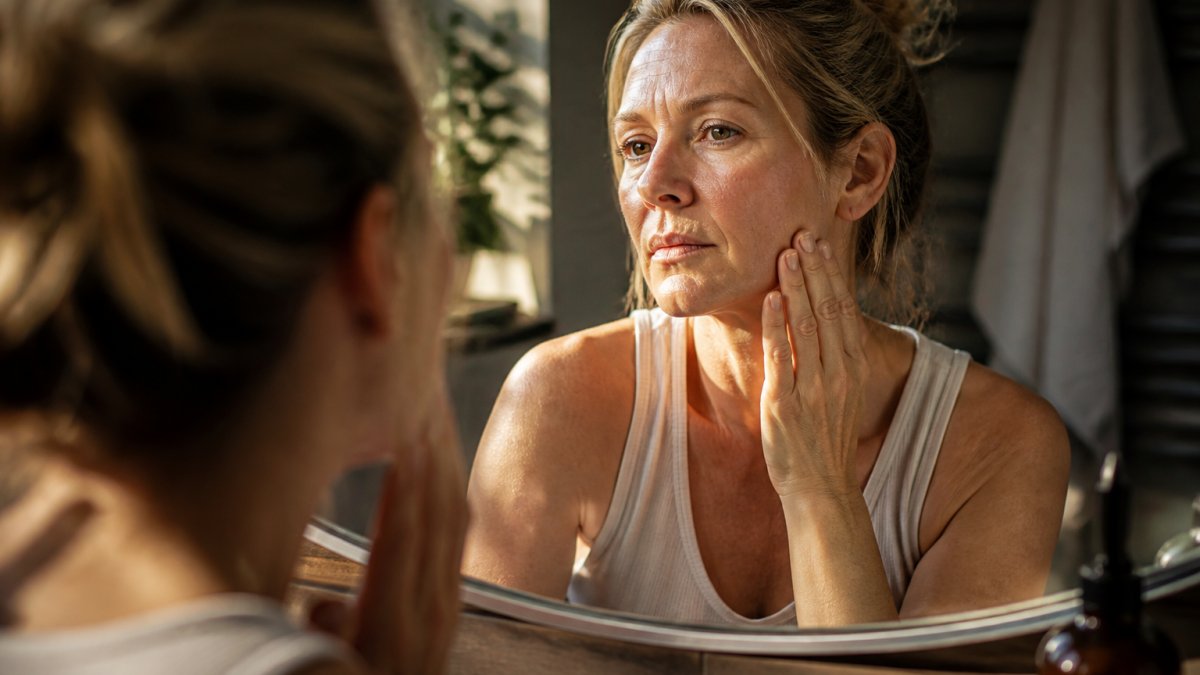
Perimenopausal skin changes and acne happen because your hormones are shifting. Oestrogen and progesterone levels fluctuate wildly during this phase, and your skin responds to every swing.
Your skin barrier weakens when hormone levels drop. This barrier is made of lipids, fats that keep moisture in and irritants out. As oestrogen declines, your skin produces fewer of these protective fats. The result: dryness, sensitivity, and sometimes unexpected breakouts all at once.
Androgens (male hormones) can spike during perimenopause too. When androgen levels rise, your skin produces more sebum. This excess oil can mix with dead skin cells and bacteria, triggering acne. Many women experience this paradox: dry, flaky skin alongside oily, congested breakouts in the same week.
The inflammation that comes with hormonal shifts makes everything worse. Your skin becomes reactive. Products that worked for years suddenly sting. Breakouts appear in places they never did before.
Understanding why this happens is the first step toward managing it. Your skin isn't failing you, it's responding to real chemical changes in your body.
Understanding Perimenopausal Acne Causes
The causes of perimenopausal acne are rooted in hormone behaviour. Unlike teenage acne, which is driven by a single hormonal surge, perimenopause acne fluctuates because your hormones are unstable.
Oestrogen decline is the primary driver. Lower oestrogen means:
- Reduced skin thickness and elasticity
- Decreased natural moisturisation
- Weakened skin barrier function
- Increased sensitivity to irritants
Progesterone fluctuation compounds the problem. Progesterone helps regulate sebum production. When it drops, oil production can spike unpredictably.
Androgen sensitivity varies from person to person. Some women's skin becomes more responsive to androgens during perimenopause, even though absolute androgen levels may not be dramatically high.
The combination of these three hormonal shifts creates a perfect storm. Your skin is drier, more reactive, and more prone to breakouts, sometimes simultaneously.
Many women find their acne appears in new locations during perimenopause. The jawline, chin, and lower face are common sites because these areas have more oil glands and androgen receptors.
Dry Skin and Acne During Perimenopause: Why Both Happen Together
Dry skin and acne during perimenopause feel contradictory, but they happen together for a clear reason: your skin barrier is compromised.
A weakened barrier loses moisture rapidly. Your skin becomes dehydrated and tight. At the same time, your skin interprets this dehydration as a signal to produce more oil. Sebaceous glands work overtime trying to compensate.
The result is a nightmare combination: dehydrated skin that's also oily and congested.
This is why harsh acne treatments often backfire during perimenopause. Stripping your skin with benzoyl peroxide or salicylic acid alone damages the barrier further. Your skin gets tighter, redder, and more irritated, and the breakouts continue because the root cause (hormonal) isn't addressed.
The solution is barrier support, not aggression. Your skin needs:
- Lipid replenishment to restore the barrier
- Gentle cleansing that doesn't strip
- Hydration without heaviness
- Anti-inflammatory support to calm reactivity
This is where niacinamide becomes valuable. It strengthens barrier function and regulates sebum production without over-drying.
Building a Perimenopause Skincare Routine That Works
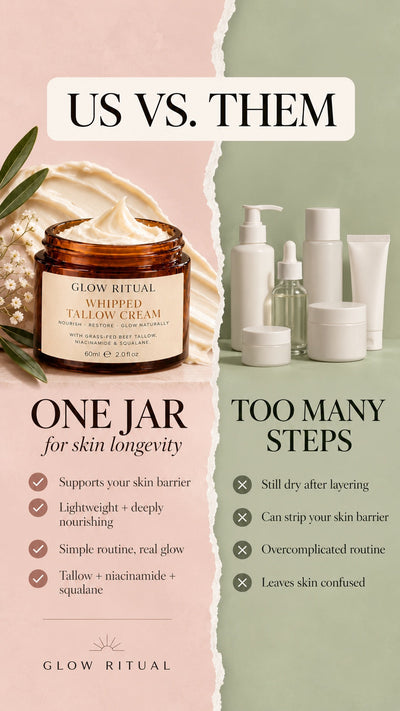
A perimenopause skincare routine should be simple. Complicated multi-step routines stress your reactive skin and make it harder to identify what's actually helping.
The foundation is a gentle cleanser. Use a cream or oil cleanser that removes the day without stripping. Your skin is already dry, harsh cleansing makes it worse.
Moisturiser is non-negotiable. During perimenopause, this is where the heavy lifting happens. Your moisturiser should:
- Contain lipids to repair the barrier
- Include actives like niacinamide for skin health
- Feel velvety, not greasy
- Absorb quickly so it doesn't interfere with makeup
Skip unnecessary steps. Serums, essences, and multiple treatments sound helpful but often irritate changing, perimenopausal skin. One good moisturiser beats five mediocre products.
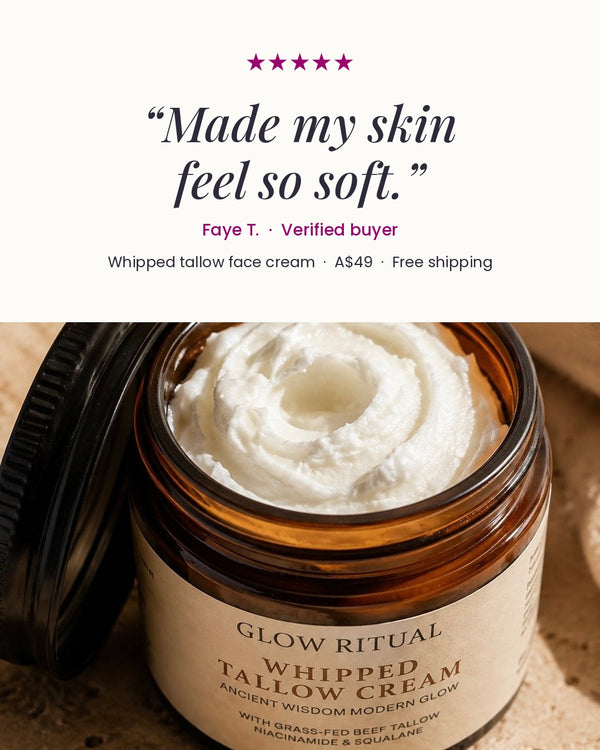
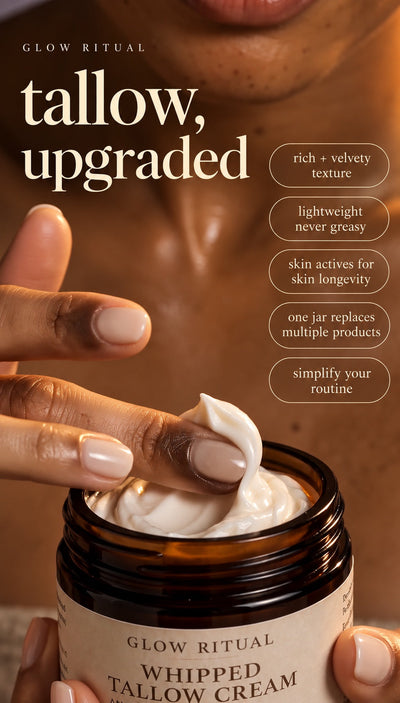
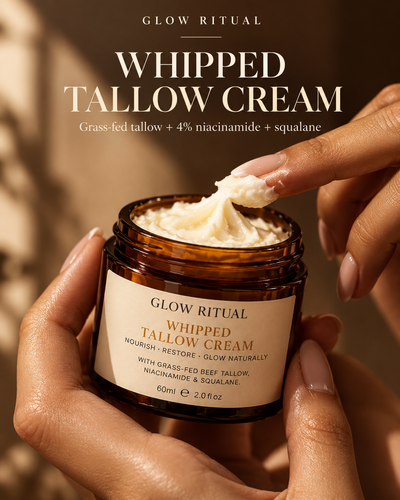
At Glow Ritual, we've designed our approach around this principle. Rather than asking you to layer multiple products, our Skin Longevity Whipped Tallow Face Cream combines barrier-supporting tallow with 4% niacinamide and squalane in a single step. It's designed for dry, changing skin that wants nourishment without heaviness.

The velvety texture matters. Traditional tallow balms feel heavy and waxy. Ours melts into skin without leaving residue, so it works under makeup and doesn't clog pores.
Skin Longevity Whipped Tallow Face Cream →
Niacinamide for Acne-Prone Skin During Hormonal Shifts
Niacinamide is one of the few actives that works well on changing, perimenopausal skin without causing irritation.
What niacinamide does:
- Strengthens the skin barrier by supporting ceramide production
- Regulates sebum production without over-drying
- Reduces redness and inflammation
- Helps even skin tone and texture
- Works alongside your skin's natural processes rather than against them
Niacinamide is particularly valuable during perimenopause because it addresses both dryness and acne without the harshness of traditional acne treatments.
Most acne-fighting ingredients (benzoyl peroxide, strong retinoids, high-dose salicylic acid) are too aggressive for perimenopausal skin. They damage the already-compromised barrier and increase sensitivity.
Niacinamide works differently. It calms inflammation, supports barrier function, and helps normalise oil production. Your skin gets clearer without becoming raw or irritated.
A 4% concentration is the sweet spot. It's effective without being excessive. Lower concentrations (1-2%) show minimal benefit. Higher concentrations don't add proportional improvement and increase the risk of irritation.
Look for niacinamide in your moisturiser rather than as a separate serum. Layering multiple actives stresses reactive skin. One well-formulated product is more effective than several competing treatments.
Other Ingredients and Habits That Support Your Skin
Beyond niacinamide, several ingredients and habits help manage perimenopausal skin changes and acne.
Squalane mimics your skin's natural oils. It hydrates without feeling heavy or greasy. During perimenopause, when your skin's natural oil production is erratic, squalane provides stable, reliable moisture.
Grass-fed tallow is rich in fatty acids that closely match your skin's own lipid profile. As your skin produces fewer protective fats during perimenopause, tallow replenishes what hormonal changes take away. It's not a trendy ingredient, it's a functional one that addresses a real barrier problem.
Vitamin E protects skin from oxidative stress and supports barrier function. It works synergistically with other nourishing ingredients.
Lifestyle habits matter as much as products:
- Sleep quality affects hormone regulation and skin healing
- Stress management reduces cortisol, which can worsen breakouts
- Hydration supports skin hydration from the inside
- Gentle exercise improves circulation and skin health
- Avoiding trigger foods (if you have sensitivities) prevents unnecessary inflammation
Don't expect overnight results. Skin takes time to settle, especially during hormonal transitions.
When to Seek Professional Help
Professional support makes sense if perimenopausal skin changes and acne don't improve with skincare alone.
See a dermatologist if:
- Your acne is severe, painful, or leaving scars
- Your skin is extremely reactive or inflamed
- You're experiencing unexplained rashes or reactions
- You want to discuss prescription options like low-dose retinoids or hormonal treatments
Consider a GP if:
- Your symptoms are significantly affecting your quality of life
- You want to discuss hormone replacement therapy (HRT) or other medical options
- You're experiencing other perimenopause symptoms alongside skin changes
A dermatologist can recommend treatments tailored to your specific skin type and concerns. Some women benefit from gentle prescription retinoids, which are more effective than over-the-counter alternatives. Others find that addressing underlying hormonal changes through medical support improves skin dramatically.
Skincare alone won't solve perimenopause skin changes and acne if the root cause is severe hormonal imbalance. But in most cases, barrier-supporting skincare combined with healthy habits makes a real difference.
Managing perimenopause skin changes and acne is about working with your body's changes, not against them. A simple routine built on barrier support, like our Skin Longevity Whipped Tallow Face Cream with niacinamide and squalane, gives your skin the nourishment and stability it needs during hormonal shifts. If your skin doesn't improve, a dermatologist can help you explore additional options tailored to your needs.
Frequently Asked Questions
Can perimenopause cause acne?
Yes. Fluctuating oestrogen and progesterone levels during perimenopause trigger increased sebum production and skin inflammation, leading to breakouts even if you've never struggled with acne before. This hormonal acne typically appears on the jawline, chin and lower face. It's one of the most common perimenopause skin changes, affecting many women in their 40s and early 50s.
Can perimenopause make skin both dry and acne-prone at the same time?
Absolutely. Your skin barrier weakens as oestrogen declines, causing dehydration and sensitivity, whilst hormonal fluctuations simultaneously trigger oil production and congestion. This confusing combination means you might experience tight, flaky patches alongside breakouts. A velvety, nourishing moisturiser with barrier-supporting ingredients like niacinamide and tallow helps address both concerns without worsening breakouts.
How long does perimenopause acne last?
Perimenopause typically lasts 4-10 years, and hormonal acne can persist throughout this phase. Breakouts often improve once you reach menopause and hormones stabilise, but this varies. Managing breakouts with consistent skincare, lifestyle adjustments and professional advice if needed can significantly reduce their impact while you're going through perimenopause.
What makes niacinamide helpful for acne-prone skin during perimenopause?
Niacinamide (vitamin B3) helps regulate sebum production, reduces inflammation and strengthens the skin barrier, all critical during perimenopause when hormonal acne meets barrier weakness. At 4% concentration, it also helps even skin tone and texture while staying gentle enough for daily use. This makes it ideal for the mixed skin concerns many women face during this life stage.