Is Tallow Right for Your Skin? How to Patch Test and Start Slowly
By Glow Ritual
Table of Contents
- Is Tallow Right for Your Skin?
- What Tallow Brings to a Moisturiser
- Can Tallow Clog Pores?
- How to Patch Test a New Moisturiser
- How to Use Tallow on Your Face
- If Something Doesn't Feel Right
- Frequently Asked Questions
Last Updated: October 17, 2026
Is Tallow Right for Your Skin?
Every skin is different, so the honest answer is that it depends on your skin and on how the tallow is made. Raw, homemade tallow is thick and heavy, and that is where most of the scepticism comes from. A professionally formulated tallow cream is a different product: the tallow is refined, whipped and balanced with skin actives and nourishing botanicals.
We don't make sensitive-skin claims for any of our products. What we can do is explain what tallow brings to a moisturiser, what is in our jar, and how to introduce any new product slowly so you can see how your own skin responds.
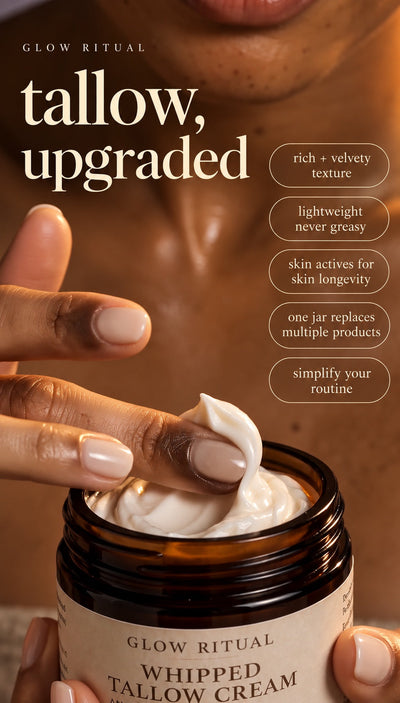
If your skin is dry, tight or changing, tallow is worth understanding. It is lipid-rich skin food, and a well-made formula like our Whipped Tallow Cream feeds your skin the lipids it needs while feeling velvety, never greasy.

What Tallow Brings to a Moisturiser
Your skin barrier is held together by lipids: fatty acids, cholesterol and ceramides. Skin's own oils are also rich in fatty acids (Sebaceous gland lipids). When skin is dry, it often needs more of these lipids, not just more water.
Tallow is naturally rich in fatty acids such as oleic, palmitic and stearic acids, plus the fat-soluble vitamins A, D, E and K. That is why we call it skin food: it helps feed your skin barrier for deep hydration instead of stripping it.
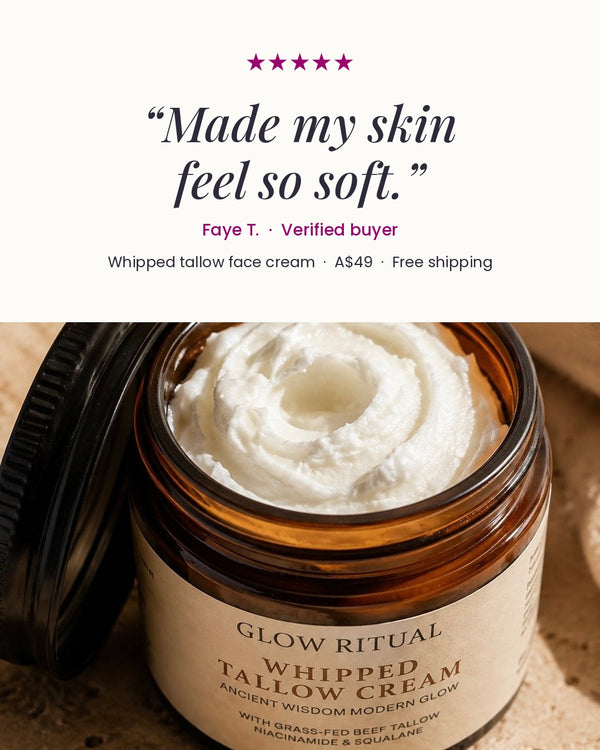
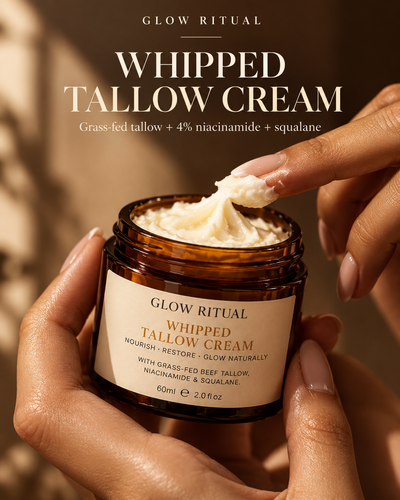
Tallow is our lipid-rich foundation, not the whole formula. Our Face Cream balances NZ grass-fed tallow with 4% niacinamide, squalane, shea butter, olive oil, vitamin E and vanilla extract. It is waterless, has no synthetic fragrance and no fillers, and is whipped below 46°C in a biotech lab for a rich, velvety texture.

Can Tallow Clog Pores?
Raw or homemade tallow can feel heavy and may not suit congestion-prone skin. A formulated cream behaves differently, because tallow is one ingredient among several and the texture is whipped so it sinks in rather than sitting on top.
If you are breakout-prone, start with a small amount, use it on drier areas first and build up slowly. A blemish here and there doesn't always mean a product is the cause, but if breakouts keep appearing where you apply it, stop and reassess.
For more detail, read Does Tallow Balm Clog Pores?
How to Patch Test a New Moisturiser
Patch testing is a simple way to try any new product with more confidence. It takes a little patience, and it is worth doing every time.
- Day 1: apply a small amount to a discreet area such as the inner forearm or behind the ear.
- Wait 24 to 48 hours: don't wash the spot, and watch for redness, itching, burning or swelling.
- Next 3 to 5 days: if all is well, use a small amount on one area of your face once a day.
- Keep everything else the same: introducing one new product at a time is the only way to know what is working.
If you notice any reaction, stop using the product. If you have a diagnosed skin condition, check with your GP or dermatologist before adding something new.
How to Use Tallow on Your Face
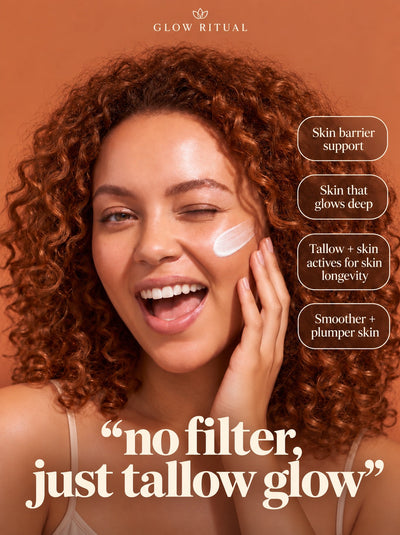
A little goes a long way. Start with a pea-sized amount, warm it between your fingertips so it melts, then press it gently into clean skin rather than rubbing.
Applying it to slightly damp skin helps it spread and lock in hydration. Use it morning and night: a thin layer under sunscreen and makeup in the morning, and a slightly more generous layer at night as the last step of your routine.
Because one rich, nourishing jar can replace several steps, a tallow cream is also a way to simplify your routine, saving you money as well as time.
Shop the Whipped Tallow Cream →
If Something Doesn't Feel Right
If a new product causes redness, burning, itching or breakouts, stop using it, rinse with lukewarm water and keep your routine minimal for a few days.
Not every ingredient suits every person, and that is useful information rather than a failure. If irritation continues, or you are unsure what is happening, speak with your GP or a dermatologist. Cosmetic skincare can support hydration and comfort, but it doesn't diagnose or treat skin conditions.
Our Whipped Tallow Cream comes with a 30-day money-back guarantee, so you can try it without pressure.
Frequently Asked Questions
Is tallow right for my skin?
It depends on your skin and the formula. Tallow is lipid-rich skin food that suits dry, changing skin that wants more nourishment. We don't make sensitive-skin claims, so patch test first and introduce it slowly to see how your own skin responds.
How do you patch test a tallow moisturiser?
Apply a small amount to your inner forearm or behind your ear and leave it for 24 to 48 hours. If there's no redness, itching or swelling, try a small amount on one area of your face once a day for 3 to 5 days before using it more widely. Stop if you notice any reaction.
Can tallow clog pores?
Raw or homemade tallow can feel heavy on congestion-prone skin. A whipped, professionally formulated cream absorbs differently, but if you are breakout-prone, start with a small amount on drier areas and build up gradually.
What is in Glow Ritual's Face Cream?
NZ grass-fed tallow with 4% niacinamide, squalane, shea butter, olive oil, vitamin E and vanilla extract. It is waterless, made with no synthetic fragrance or fillers, and whipped below 46°C in a biotech lab.