How to Treat Perimenopause Skin Dryness: A Practical Guide
By Glow Ritual
Table of Contents
- Why Perimenopause Causes Skin Dryness
- Perimenopause Dry Skin Remedies That Work
- Treating Perimenopause Itchy Skin: Soothe and Protect
- Choosing the Best Moisturiser for Perimenopause Dry Skin
- Building a Simple Perimenopause Skincare Routine
- Key Ingredients for Hormonal Dry Skin
- Common Mistakes to Avoid When Treating Perimenopause Dryness
- Frequently Asked Questions
Last Updated: 12 October 2026
Why Perimenopause Causes Skin Dryness
Perimenopause brings significant changes to your skin, and understanding how to treat perimenopause skin dryness is essential for restoring comfort. As oestrogen levels fluctuate, your skin loses its ability to retain moisture effectively. This happens because oestrogen plays a crucial role in maintaining the skin barrier, the protective layer that keeps water in and irritants out.
During perimenopause, your skin produces fewer natural oils and holds onto less water. The result is visible dryness, tightness, and sometimes flaking. Many women also notice their skin feels sensitive or reactive during this time, which compounds the dryness problem.
The good news is that understanding what's happening helps you choose the right treatment approach. Your skin isn't permanently damaged. It's responding to hormonal shifts, and the right moisturiser can restore comfort and appearance quickly.
Perimenopause Dry Skin Remedies That Work
The most effective remedies for perimenopause dry skin focus on three things: barrier repair, deep hydration, and protection from further moisture loss.
Barrier-repair ingredients are your first priority. Your skin barrier has become compromised, so it needs specific support. Niacinamide helps strengthen the barrier and reduce inflammation. Squalane provides silky hydration without heaviness. Together, these ingredients work to restore your skin's natural protective function.
Lipid-rich moisturisers deliver the deep nourishment perimenopause skin desperately needs. Unlike lightweight serums or gels, lipid-rich formulas actually replace the oils your skin has lost. Tallow is one of the most effective lipid sources because it closely matches your skin's natural composition, making it easier for your skin to absorb and use.
A practical remedy routine looks like this:
- Cleanse gently with a nourishing cleanser
- Apply moisturiser while skin is still slightly damp
- Layer a richer cream if needed (especially at night)
- Use this routine consistently for at least 2-3 weeks before expecting visible improvement
Dermatological research on skin barrier function shows that consistent moisturising with barrier-supporting ingredients produces measurable improvements in skin hydration within 14-21 days.
Treating Perimenopause Itchy Skin: Soothe and Protect
Itchy skin during perimenopause often accompanies dryness, and treating both requires a slightly different approach than addressing dryness alone.
Itching happens when your skin barrier is compromised and irritants penetrate more easily. The solution is twofold: soothe the current irritation and prevent future irritation by strengthening your barrier.
Immediate soothing strategies:
- Apply moisturiser to damp skin (this locks in water)
- Choose fragrance-free products (fragrance is a common irritant)
- Avoid hot water when cleansing (use lukewarm water instead)
- Pat skin dry gently rather than rubbing
Long-term itch prevention:
Ingredients like panthenol and allantoin actively soothe irritated skin. Niacinamide helps support the skin barrier and improve the look of uneven tone. When you use these ingredients consistently, the itching typically subsides within a week or two.
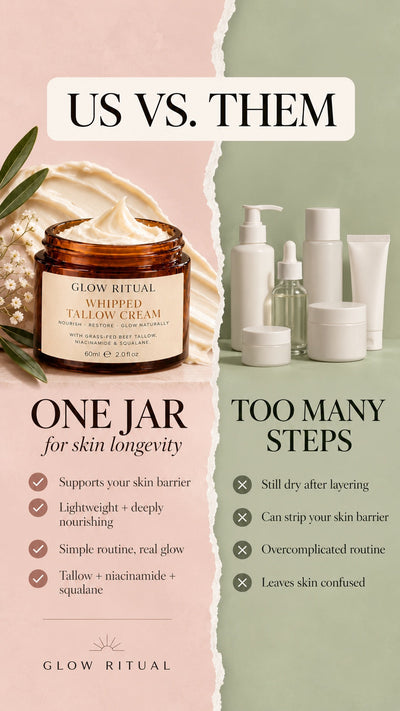
Many women find that switching to a single, well-formulated moisturiser actually reduces itching more effectively than using multiple products. Each product you add is another potential irritant. Simplifying your routine removes unnecessary triggers.
Choosing the Best Moisturiser for Perimenopause Dry Skin
The best moisturiser for perimenopause dry skin combines lipid nourishment with proven actives that address the specific changes happening in your skin right now.
Look for these key features in any moisturiser you're considering:
- Lipid-rich base: Tallow, shea butter, or plant oils that closely match your skin's natural composition
- Barrier-supporting actives: Niacinamide (aim for 4% or higher) and squalane
- Velvety texture: You want deep nourishment without heaviness or greasiness
- Fragrance-free formula: Fragrance is unnecessary and can irritate sensitive, changing skin
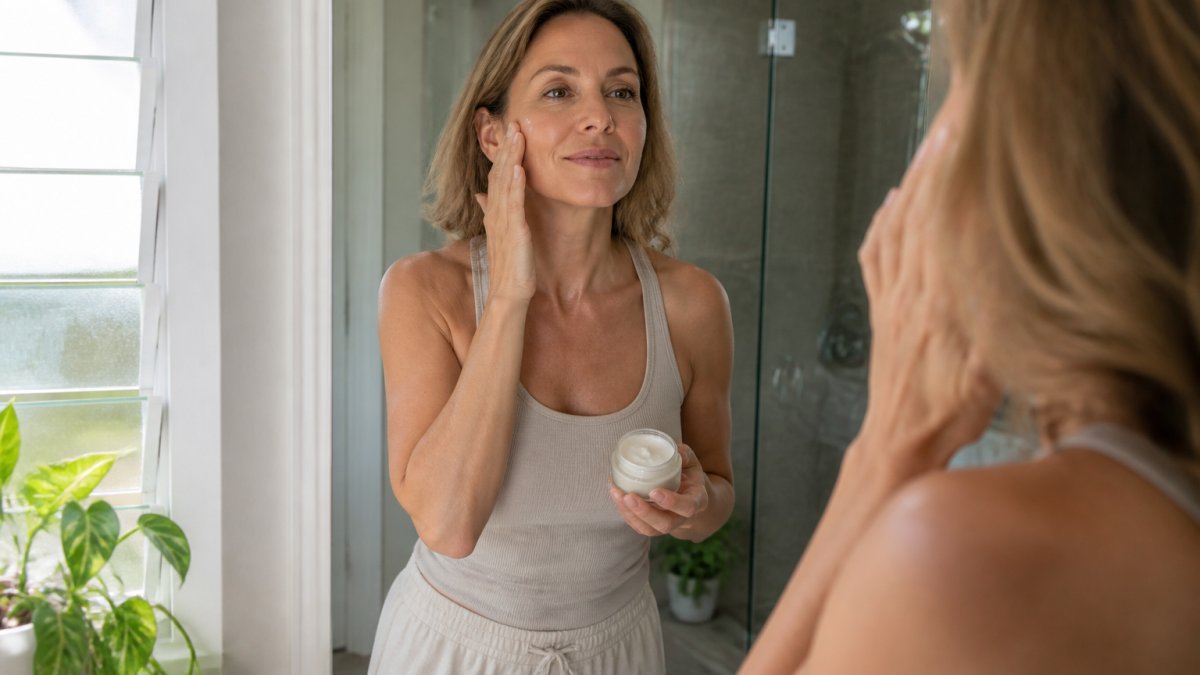
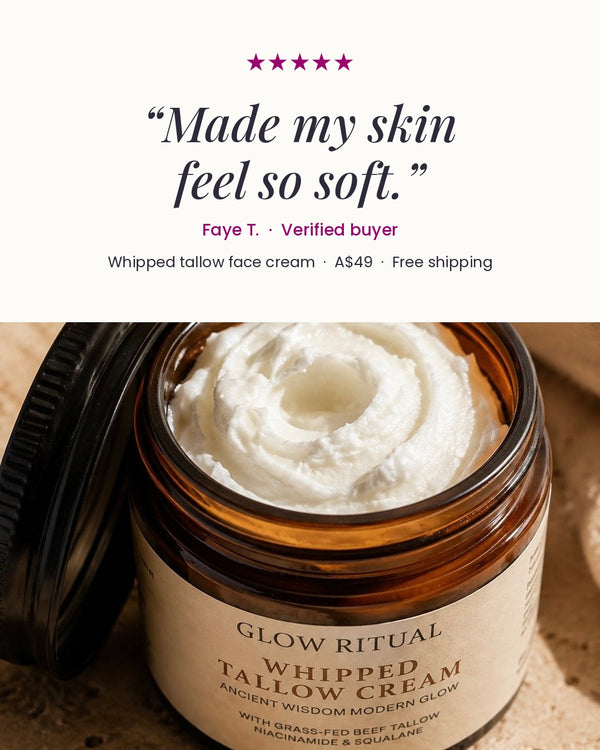
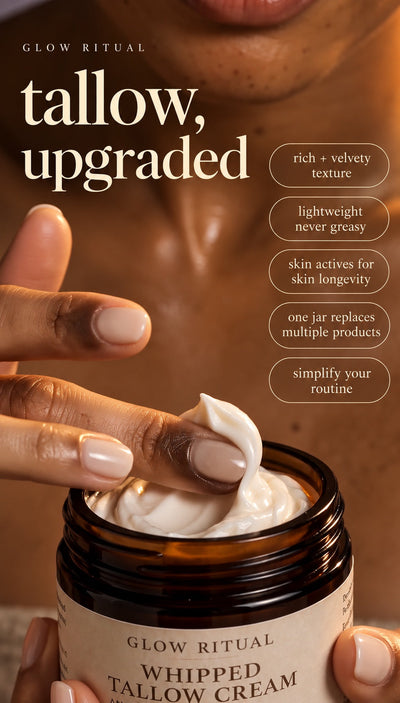
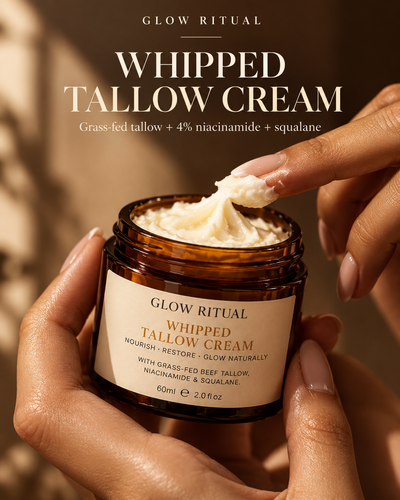
At Glow Ritual, we designed our Skin Longevity Whipped Tallow Face Cream specifically for this challenge. It combines grass-fed tallow with 4% niacinamide, squalane, and nourishing botanicals. The formula is whipped to create a velvety, fast-absorbing texture that feels nothing like heavy traditional tallow balms.

The difference is significant. Many women have tried tallow products before and found them greasy or heavy. Our approach combines the lipid benefits of tallow with modern skincare actives, so you get deep nourishment without the weight.
When choosing your moisturiser, avoid these common mistakes:
- Don't assume "natural" means effective (natural ingredients still need proper formulation)
- Don't assume the heaviest product is best (well-whipped formulas absorb better)
- Don't use multiple moisturisers (one well-chosen product beats a complicated routine)
Building a Simple Perimenopause Skincare Routine
Your perimenopause skin doesn't need a complicated routine. In fact, complexity often makes things worse by introducing more potential irritants.
A simple, effective routine has three steps:
- Cleanse gently: Use a nourishing cleanser that doesn't strip your skin. Avoid hot water.
- Moisturise immediately: Apply your chosen moisturiser to damp skin within 30 seconds of cleansing.
- Protect at night: Use the same moisturiser or a slightly richer version before bed.
That's genuinely all you need. Many women spend money on serums, essences, toners, and treatments when what their skin actually needs is one excellent moisturiser used consistently.
The routine should take less than two minutes. If your skincare routine takes longer than that, you're doing too much.
Morning routine:
- Rinse with lukewarm water
- Apply moisturiser to damp skin
- Wait 2-3 minutes before applying makeup or sunscreen
Evening routine:
- Cleanse gently
- Apply moisturiser to damp skin
- Optional: use a richer product if your skin feels particularly tight
Consistency matters more than complexity. Using one good moisturiser every single day produces better results than using five products sporadically.
Key Ingredients for Hormonal Dry Skin
Certain ingredients have proven particularly effective for treating dry skin during perimenopause. Understanding what these ingredients do helps you evaluate any moisturiser you're considering.
Niacinamide strengthens your skin barrier and reduces inflammation. It also helps regulate oil production, which is useful if your skin is sometimes dry and sometimes oily (a common perimenopause pattern). Aim for products containing at least 4% niacinamide for visible results.
Skin Longevity Whipped Tallow Face Cream →
Squalane is a silky oil that mimics your skin's natural sebum. It hydrates without feeling heavy or greasy. Unlike heavier oils, squalane absorbs quickly and works well under makeup.
Grass-fed tallow contains lipids that closely match your skin's natural composition. Your skin recognises tallow as "compatible," which means it absorbs and uses these lipids effectively. This is why tallow is so effective for barrier repair.
Shea butter provides rich nourishment and contains natural compounds that support skin health. It's particularly effective for very dry patches.
Vitamin E protects skin from oxidative stress and supports barrier function. It's especially valuable during perimenopause when your skin is more vulnerable.
Glycerine draws water into your skin and helps it stay hydrated. Even small amounts of glycerin improve how well your skin retains moisture.
These ingredients work synergistically. A well-formulated moisturiser combines them in the right proportions so each ingredient enhances the others' effectiveness.
Common Mistakes to Avoid When Treating Perimenopause Dryness
Understanding what doesn't work saves you time, money, and frustration when you treat perimenopause skin dryness.
Mistake 1: Using too many products
More products mean more potential irritants. Your compromised skin barrier is sensitive right now. Each new product is a risk. One excellent moisturiser beats five mediocre ones.
Mistake 2: Assuming heavier always means better
Heavy, occlusive products feel nourishing initially but often sit on your skin rather than absorbing. Well-whipped formulas that absorb properly feel better on skin. Your skin needs to use the moisturiser, not just have it sit on the surface.
Mistake 3: Ignoring water retention
Hydration requires two things: water and something to hold it in. A good moisturiser does both. If your skin still feels tight after moisturising, you need a formula that includes humectants (ingredients like glycerin that draw water in) plus occlusives (ingredients that seal it in).
Mistake 4: Switching products too frequently
Your skin needs time to adjust. Most ingredients take 2-3 weeks to show visible results. If you change products every few days, you'll never see improvement. Commit to one moisturiser for at least 21 days before deciding whether it works.
Mistake 5: Using fragrance or essential oils
Fragrance feels pleasant but irritates sensitive, changing skin. Fragrance-free doesn't mean scentless (some products have a natural scent from ingredients). It means no added fragrance, which is what your skin needs right now.
Mistake 6: Cleansing with hot water
Hot water strips your skin's natural oils further. Use lukewarm water instead. This small change makes a measurable difference in how quickly your skin recovers.
Mistake 7: Waiting for perfect skin before treating it
Don't wait until your dryness is severe. Start treating it as soon as you notice changes. Early intervention prevents the cycle from worsening.
Treating perimenopause skin dryness works best when you focus on barrier repair and consistent hydration rather than chasing trendy ingredients or complicated routines. Your skin is changing, and it needs support, not complexity. Get started with Glow Ritual's Skin Longevity Whipped Tallow Face Cream and experience how deeply nourishing whipped tallow can be when it's properly formulated with barrier-supporting actives like niacinamide and squalane. Our 30-day money-back guarantee means you can try it risk-free.
| Routine Step | Product Type | Timing | Frequency |
|---|---|---|---|
| Cleanse | Gentle, nourishing cleanser | Morning and evening | Twice daily |
| Moisturise | Lipid-rich formula with niacinamide | Immediately after cleansing on damp skin | Twice daily |
| Protect | Same or richer moisturiser | Before bed | Evening |
| Sunscreen | Velvety formula (if using) | After moisturiser dries | Morning only |
Australian Menopause Society guidance on skin changes confirms that hormonal fluctuations during perimenopause directly affect skin barrier function and moisture retention. Cosmetic Ingredients Review data on niacinamide safety and efficacy documents that niacinamide at 4% concentration produces measurable improvements in skin barrier function within 2-4 weeks of consistent use.
Frequently Asked Questions
Why does skin become dry during perimenopause?
Falling oestrogen levels during perimenopause reduce the skin's ability to retain moisture and produce natural oils. Oestrogen supports collagen production and skin barrier function, so as levels decline, skin becomes thinner and drier. This is a normal hormonal shift, not a sign of poor skincare. Targeted moisturisation with barrier-supporting ingredients like niacinamide and lipid-rich formulas can help counteract this change.
What's the best moisturiser for perimenopause dry skin?
Look for moisturisers combining lipid-rich ingredients with proven actives. The Skin Longevity Whipped Tallow Face Cream ($49) blends grass-fed tallow with 4% niacinamide and squalane, a combination that rebuilds the skin barrier whilst improving tone and texture. Tallow mimics skin's natural lipid structure, niacinamide strengthens barrier function, and squalane adds silky hydration without heaviness. Apply to damp skin for maximum absorption.
Can I treat perimenopause itchy skin with the same products as dryness?
Yes, itching during perimenopause often stems from the same barrier dysfunction causing dryness. Ingredients like niacinamide calm inflammation whilst strengthening the barrier, reducing both dryness and irritation. Tallow's lipid profile soothes compromised skin without irritants. Start with small amounts on clean, damp skin and patch test first. If itching persists or worsens, consult a GP to rule out other causes.
How long does it take to see improvement in perimenopause skin dryness?
Most people notice softer, more hydrated skin within 2-4 weeks of consistent use. Barrier repair takes longer, typically 6-8 weeks to see significant improvement in texture, plumpness and radiance. Apply your moisturiser twice daily to clean, slightly damp skin for best results. If your skin doesn't improve after 30 days, Glow Ritual offers a 30-day money-back guarantee, so you can try risk-free.